Blockline And Associate Ltd Blog


Blockline and Associate Ltd are sellers of light crude oil and other petroleum products. We also sell and lease out marine equipments, construction machinery and other equipments.

We sell Crude Oil, D2, AGO and other Petroleum product such as:

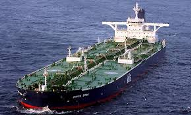
Crude Oil TankerNigeria Bonny Light Crude Oil (BLCO, FLCO and ALCO, etc): We sell mostly on FOB, CIF, TTO and TTT/STS Basis.
Automotive Gas Oil (AGO) and D2: We sell mostly on CIF and TTT/STS.

Bitumen: We sell on CIF and FOB Basis

Marine Equipments/Machines:

We sell and lease all kinds of marine equipments/machines.

Well sell and lease all kinds of vessel e.g. oil tanker, cargo vessel, crew vessel etc.

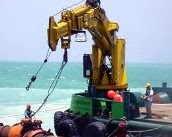
Marine DredgesWe sell and lease tug-boats of all kinds.

We sell and lease barges and sea going barges.

We sell and lease dredgers, swamp-buggy, cranes of all kinds, tug-boats of all kinds bulldozers, etc.

Crushing machine of all kinds and screening plant: We sell on CIF and FOB Basis.

Steel and Metal:

We sell steel pipes and tubes of all kinds

We sell metals of all kinds.

GENERAL CONTRACTORS:

We are also into real estate, transportation, communications and more.


Showing posts with label Blockline Associate Ltd. Show all posts

Thursday, 14 August 2014

U.S. Energy Agency sees oil imports falling to zero by 2037

Net oil imports to the U.S. could fall to zero by 2037 because of robust production in areas including North Dakota’s Bakken field and Texas’s Eagle Ford formation, according to a government projection released.


The Energy Information Administration, the branch of the Energy Department that collects and analyzes energy data, said the once-chimerical goal of U.S. energy independence could be within reach in 23 years under a “high-production” estimate contained in an update of its periodic energy forecast.


“This is the first time that a case in the Annual Energy Outlook has projected that net imports’ share of liquid fuels consumption could reach zero,” said John Krohn, a spokesman for the EIA, in an email.


Estimating oil production is a tricky business, particularly for the length of time in EIA’s analysis. Forecasters must make a number of guesses, including the size of oil reserves lying thousands of ft underground, how quickly technology advances, and whether a rise in oil prices can make resources once too costly to produce suddenly economic.


“Forecasts going out 20 years make astrology look like respectable science,” said Stephen Schork, President of Schork Group, a consulting group in Villanova, Pennsylvania. “Ten years ago we were importing natural gas, and now we’re looking at exports. The changes have over the last few years have been dramatic and there’s really no way to predict things more than a couple years in advance.”


Some industry analysts are questioning whether the formula used to calculate oil reserves works for shale formations.The Arps method, named for Jan Arps, a petroleum engineer who invented it in 1945, has been the standard for decades.


John Lee, a University of Houston engineering professor, told Bloomberg News that estimates of billions of barrels of untapped shale oil rely on limited drilling history and may exaggerate future production, raising questions about whether U.S. energy independence is truly in reach. Some companies have lowered forecasts after production didn’t reach anticipated levels.


One thing is undeniable: the U.S. energy picture is changing rapidly. If anything, the EIA is overly pessimistic even in its high-production scenario, said Pavel Molchanov, an analyst at Raymond James Financial.


The St. Petersburg, Florida-based company projects the U.S. will essentially be energy independent by 2020, thanks to an increase in oil and biofuels production and a slight downturn in demand for liquid fuels.


“It’s absolutely night and day from where we were five years ago,” Molchanov said in a phone interview.


Under EIA’s high-resource assessment, it’s most optimistic, production increases to 13 MMbpd over the next two decades, based on more favorable assumptions relating to technological advancements and well productivity.


Production levels never exceed 10 MMbpd under a reference case, which assumes no dramatic changes to drilling activity.


Already net oil imports have fallen to about 5 MMbpd from a peak of almost 13 MMbbl in 2006, thanks in large measure to advances in techniques such as hydraulic fracturing and horizontal drilling in shale rock, which are also known as “tight oil” formations.


Production from tight oil formations has increased from less than 1 MMbpd in 2010 to 3 MMbpd in 2013, according to the EIA.


The EIA also included a low-resource estimate where production rises to 9.1 MMbpd in 2017 before falling to 6.6 MMbpd in 2040.


In the EIA reference case, the net import share of petroleum and other liquids consumed in the U.S. falls to 25% in 2016 and then rises to 32% in 2040.


“The high case is very high,” said Sarah Emerson, managing principal of ESAI Energy in Wakefield, Massachusetts.“Their reference case is reasonable and a lot more likely.”


Guy Caruso, who led the EIA from 2002 to 2008, said he thought production may end up coming in somewhere between the agency’s reference case and its high-end assessment.


More experience drilling in the U.S. shale reserves and new research and development spending will probably increase productivity, said Caruso, now a senior adviser at the Center for Strategic and International Studies, a research group in Washington.


“A lot of things have to go right” for the high-end case to come to fruition, Caruso said in a phone interview.“It’s so early in the game, but it’s not unreasonable to see something like this. We could be pretty low on the learning curve.”


Providing useful resources, articles and writings on crude oil, other petroleum products, energy and gas. By Blockline and Associate Ltd Nigeria Ltd, online.

Tuesday, 12 August 2014

Total launches Kaombo ultra-deep project offshore Angola

Total and its JV partners have made the final investment decision to develop the ultra-deep offshore Kaombo project in Angola. With a production capacity of 230,000 bpd, Kaombo will develop estimated reserves of 650 MMbbl. Following an intensive optimization exercise, the project’s capital expenditure to reach full capacity was reduced by $4 bn to $16 bn, with an expected start-up in 2017.


“With the launch of Kaombo, the upcoming start-up of CLOV and three exploration wells planned in the Kwanza basin this year, Angola remains a priority country for Total,” outlined Yves-Louis Darricarrere, President Total Upstream. “While continuing our commitment to develop the Angolan oil industry, Total has significantly optimized the project’s design and contracting strategy in recent months. Kaombo illustrates both the Group’s capital discipline and objective to reduce capex.”


Located approximately 260 km offshore Luanda in water depths ranging from 1,400 to 1,900 m, the Kaombo project will develop six of the 12 discoveries already made on Block 32. The six fields (Gengibre, Gindungo, Caril, Canela, Mostarda and Louro) cover an area of 800 sq km in the central and southeast part of the block.


The Kaombo development scheme includes 59 subsea wells connected through around 300 km of subsea lines to two FPSOs, each with a production capacity of 115,000 bpd. The two FPSOs will be based on conversions of very large crude carriers (VLCCs) into production units. Associated gas will be exported to the onshore Angola LNG plant.


The Kaombo development includes a substantial level of local content. Over 14 mn man-hours of fabrication and construction works will be performed locally in Angolan yards which will be used for equipment fabrication and assembly.


Total is the operator of Block 32, with a 30% stake, alongside Sonangol P&P (30%), Sonangol Sinopec International (20%), Esso Exploration and Production Angola (Overseas) (15%) and Galp Energia (5%).


Providing useful resources, articles and writings on crude oil, other petroleum products, energy and gas. By Blockline and Associate Ltd Nigeria Ltd, online.

Friday, 8 August 2014

OPEC will need to pump more oil after March plunge, IEA says

OPEC will need to pump more crude in the second half of the year to meet global demand after its production plunged to a five-month low in March, according to the International Energy Agency.


Supplies from the Organization of Petroleum Exporting Countries “plummeted” by 890,000 bpd to 29.62 MMbpd in March, the Paris-based IEA said in its monthly oil market report. That’s below OPEC’s collective 30 MMbbl production target and means the group will have to increase output in the second half of the year, it said. The agency’s global oil demand growth forecast was little changed.


“OPEC supply actually registered a steep drop in March from February highs, but this setback looks likely to be short-lived,” the IEA, an adviser to oil-consuming nations, said. “Prospects for OPEC output are also on the rise - though not without considerable political risk.”


Brent crude prices have dropped 3.3% this year to trade at about $107.12 a barrel today amid rising U.S. production and signs of slowing emerging economies. The International Monetary Fund cut growth predictions for countries including Brazil, Russia, South Africa and Turkey earlier this month.


“Demand growth is lagging supply,” Andrey Kryuchenkov, an analyst at VTB Capital in London, said in an emailed response to questions. “Despite a higher call on OPEC in the second half, supplies are plentiful. It’s little surprise OPEC supplies slipped in March since demand slows.”


Production from OPEC’s 12 members dropped in March amid declines in Iraq, Saudi Arabia and Libya, the IEA said. The group, which is responsible for about 40% of world oil supplies, pumped 30.51 MMbpd in February.


OPEC will need to provide 30.6 MMbpd of crude in the second half, the agency estimated. That’s an increase of 350,000 bpd from the previous forecast, as the IEA reduced its expectations for oil production from countries including Russia and Kazakhstan.


Oil supplies from nations outside OPEC are forecast to reach 56.2 MMbpd this year, a downward revision of 200,000 bpd from the previous month, the IEA said.


Global demand is seen increasing to 92.7 MMbpd this year, little changed from last month’s report, according to the IEA. The agency trimmed its forecast for Russian oil consumption by 55,000 bpd to 3.5 MMbpd this year as its economy slows after the nation annexed Crimea.


“One month after the events in Crimea, market watchers are taking stock of their impact on oil markets,” the IEA said. “Given the still volatile nature of the situation on the ground, there are more questions than answers.”


In separate report yesterday, OPEC trimmed estimates for the amount of crude it will need to pump this year amid rising U.S. supplies, and predicted that a “supply buffer” will accumulate before demand peaks in the summer.


Providing useful resources, articles and writings on crude oil, other petroleum products, energy and gas. By Blockline and Associate Ltd Nigeria Ltd, online.

Monday, 14 July 2014

Encana to sell U.S. LNG assets to Stabilis Energy

Stabilis Energy has signed a definitive agreement to purchase substantially all of the U.S. based assets of Encana Natural Gas Inc. (ENGI).


Denver-based ENGI is a leading distributor of LNG fuel to domestic high horsepower engine operators in the oilfield, mining, rail, marine, over the road transportation, and industrial sectors. ENGI is a subsidiary of Encana Corporation. The transaction is scheduled to close on April 30, 2014.


"We are proud to announce the addition of Encana Natural Gas Inc.' s people, assets, and customer relationships to Stabilis Energy," said Casey Crenshaw, President and CEO of Stabilis Energy.


In addition to adding ENGI' s staff, Stabilis has agreed to purchase its fleet of cryogenic rolling stock assets including storage and regasification trailers, mobile fueling units, and other related equipment. Stabilis will fulfill all of ENGI' s existing customer obligations including its existing contracts, subject to customer consent.


Stabilis plans to open its first LNG production facility in George West, Texas, in January 2015 to service oilfield customers in the Eagle Ford shale. The facility is being built as part of a previously announced venture with Flint Hills Resources LLC to build up to five LNG production facilities that target oilfield customers.


The George West facility is under construction now and will be able to produce approximately 100,000 LNG gallons per day when complete. Other targeted LNG liquefaction plant locations include West Texas, North Dakota, and other major oilfield regions. Stabilis also will continue to source fuel from ENGI' s large existing third-party supply network.


"Encana is pleased that Stabilis Energy will carry on the outstanding LNG business that our Natural Gas team has worked hard to build over the past several years," said David Hill, executive V.P. of Encana Corporation. "Encana believes that natural gas has a bright future as a domestic fuel source for high horsepower engines and that LNG will be an important part of this value chain." Encana will remain a customer of Stabilis Energy for LNG.


Providing useful resources, articles and writings on crude oil, other petroleum products, energy and gas. By Blockline and Associate Ltd Nigeria Ltd, online.

Thursday, 10 July 2014

Petronas awards RSC to EQ Petroleum, Uzma Energy Venture

Petronas has awarded a small field risk service contract (SFRSC) to EQ Petroleum Developments Malaysia and Uzma Energy Venture (Sarawak) (Uzma) for the development and production of the Tanjong Baram field, located about 6 km offshore Sarawak.
 
The SFRSC was signed on 27 March in Kuala Lumpur, where Petronas was represented by its V.P. of Petroleum Management Encik Adif Zulkifli, EnQuest by its Head of International Mr Faysal Hamza and Uzma by its CEO Dato’ Kamarul Redzuan Mohamed.
 
Under the terms of the contract, Petronas is the project owner while EnQuest and Uzma are the contractors for this petroleum arrangement.
 
“This SFRSC will see EnQuest and Uzma conduct development and production works at the Tanjong Baram field. The first hydrocarbon from the Tanjong Baram field is expected to be within 11 months from now,” said Adif Zulkifli.
 
Petronas has awarded four RSCs to date, the Berantai field to Petrofac and Sapura Kencana Petroleum in January 2011, the Balai-Bentara cluster off Sarawak to a consortium comprising Roc Oil, Dialog Group and Petronas Carigali in August 2011, the Kapal, Banang and Meranti cluster to Coastal Energy KBM in June 2012 and the Tembikai-Chenang cluster to Vestigo Petroleum in October 2013.


Providing useful resources, articles and writings on crude oil, other petroleum products, energy and gas. By Blockline and Associate Ltd Nigeria Ltd, online.

Contact Blockline Associate Ltd
Contact Blockline Associate Ltd At Sea

World Energy Production