Blockline And Associate Ltd Blog


Blockline and Associate Ltd are sellers of light crude oil and other petroleum products. We also sell and lease out marine equipments, construction machinery and other equipments.

We sell Crude Oil, D2, AGO and other Petroleum product such as:

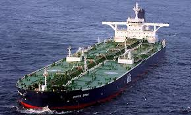
Crude Oil TankerNigeria Bonny Light Crude Oil (BLCO, FLCO and ALCO, etc): We sell mostly on FOB, CIF, TTO and TTT/STS Basis.
Automotive Gas Oil (AGO) and D2: We sell mostly on CIF and TTT/STS.

Bitumen: We sell on CIF and FOB Basis

Marine Equipments/Machines:

We sell and lease all kinds of marine equipments/machines.

Well sell and lease all kinds of vessel e.g. oil tanker, cargo vessel, crew vessel etc.

Marine DredgesWe sell and lease tug-boats of all kinds.

We sell and lease barges and sea going barges.

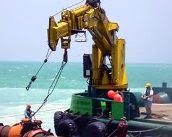
We sell and lease dredgers, swamp-buggy, cranes of all kinds, tug-boats of all kinds bulldozers, etc.

Crushing machine of all kinds and screening plant: We sell on CIF and FOB Basis.

Steel and Metal:

We sell steel pipes and tubes of all kinds

We sell metals of all kinds.

GENERAL CONTRACTORS:

We are also into real estate, transportation, communications and more.


Showing posts with label Bonny Light Crude. Show all posts

Saturday, 16 August 2014

CBM Asia reported plans for commercializing its 705 Bcf resource at Kutai West PSC

CBM Asia reported plans for the Kutai West PSC development. CBM Asia’s primary goal for 2014 is to commercialize the Kutai West Production Sharing Contract (PSC) in East Kalimantan, Indonesia, located near the Bontang LNG export facility. Achieving early-stage commercial production will help unlock the value of this asset, which is situated close to high-priced Asian gas markets.


CBM Asia holds an 18% working interest in the Kutai West PSC, representing 705 Bcf of recoverable prospective resources net to CBM Asia from the total 3.9 Tcf estimated by an independent audit conducted in 2013 by Netherland, Sewell & Associates. Kutai West is regarded as one of the best and commercially most advanced of the more than 50 awarded CBM blocks in Indonesia.


Kutai West is adjacent to the Sanga-Sanga PSC, where VICO (BP and partners) is commercially producing and selling CBM for power generation and gas to the nearby Bontang LNG facility. As VICO notes: “This is the first time in Indonesia that any CBM facilities have produced and sold gas and represents a major milestone in the exploration of CBM potential.”


Kutai West will produce from the same coal seams as at Sanga-Sanga. To date, the company and its partners have drilled four CBM test wells on the block, verifying thick coal seams (average 105 ft) with high gas content (average 300 ft3/ton; dry, ash-free basis) and gas saturation (close to 100%), as well as 5-mD permeability. The KWCBM-01 well is currently being dewatered, venting produced gas from the flare stack, which is a key first step towards larger scale production.


Management’s main focus this year is to initiate commercial gas production at Kutai West with a 5-well pilot, followed by a larger commercial scale 25-well development (total 30 wells). To this end CBM has reached consensus with its partners to sell the produced gas to locally installed gas engine power generation units selling power into the PLN grid and later to feed gas into the gas-short Bontang LNG export network. Anticipated gas prices are $8/Mcf or higher. Bontang exports LNG to Japan and other Asian rim importers, which are critically short of natural gas.


Under Phase 1 four new CBM wells will be drilled near the existing KW-CBM01, forming an effective dewatering pilot on tight 40-acre spacing to accelerate gas production and demonstrate commerciality. Produced gas estimated at 2.0-2.5 MMcfd (gross) would be sold to a power station developer/operator and PLN for on-site power generation at about $8/Mcf. The government of Indonesia strongly supports such commercialization prior to formal Plan of Development (POD) approval. Total capex for Phase 1 is estimated at $7.16 mn, comprising four wells at $1.46 mn/well cost (drilling & completion, water management, and surface facilities) plus $1.32 mn in engineering and overhead costs. An additional $200,000 would be required for field operating expenses during the first year. CBM Asia’s share of the Phase 1 costs is estimated at $2.15 mn.


The 10-MW power station would employ an array of 1-to5-MW reciprocating engines; hundreds of such installations already are in operation throughout Indonesia.The power station would be independently owned and operated, with no capital required from CBM Asia. Drilling and completing the wells would require about two months, plus an additional four months to install and commission the power plant. An updated engineering audit would be conducted to certify proved and probable reserves, with an excellent chance of qualifying the project for low-cost Phase 2 project financing.


Following success in Phase 1 and the approval of the Phase 2 POD, CBM Asia and its partners would utilize two rigs to drill an additional 25 wells (30 total) over a 7-month period. The increased production initially would supply the power station. Pending successful conclusion of a sales agreement, a 12-in., 20-km pipeline would be constructed to the Badak compressor station by a third party under BOO basis and funded via an estimated $0.50/Mcf transport tariff. Total capex for phase 2 is estimated at $36.3 mn with CBM Asia’s share of costs estimated at $8.0 mn. Production estimated at 12.5 MMcfd (gross) would be sold into the Bontang LNG export network at approximately $8/Mcf or more. Note that Bontang is the world’s second largest LNG plant (22.5 mtpa), shipping primarily to Japan, but local  conventional gas supplies are in decline and the facility is currently operating at less than 60% of capacity.
 
“The Kutai West and Sekayu PSC’s both have substantial engineered resources for commercialization, but Kutai West is most viable for near-term commercial development” noted President and CEO Charles Bloomquist. “We are focusing our efforts on achieving commercial production and gas sales at the block as soon as possible, likely before the end of 2014. We estimate that with completion of the Phase 2 development CBM Asia will be operational cash flow positive. Jointly with its partners the company has developed a technical plan and budget for the Kutai West commercial development and will post details in a new presentation on its website in the coming days.”


Providing useful resources, articles and writings on crude oil, other petroleum products, energy and gas. By Blockline and Associate Ltd Nigeria Ltd, online.

Saturday, 9 August 2014

Emerson invests $60 million in new flow measurement facility

Emerson Process Management is expanding the company’s existing manufacturing and engineering services campus in Cluj-Napoca, Romania.


The expansion includes a new, 18,800-sq-m flow measurement manufacturing building. This $60-million investment will help meet growing demand for the company’s flow measurement products and services in Europe and other regions.


Additionally, in the summer of 2014, Emerson Process Management moves into a separate, newly constructed $16-million facility on the Cluj campus that will be home to the Regional Project Engineering Center and the European System Integration Center for its PlantWeb Solutions Group. This facility will house up to 600 employees who provide engineering and support services for European control systems and automation projects, plus an initial 100 additional personnel to assemble and test control systems for projects throughout Europe.


The new flow technology manufacturing building will offer calibration, services, and customer training facilities for Emerson Process Management’s Micro Motion, Rosemount, and Roxar flow measurement technologies. This facility will provide modern and spacious production capabilities as well as offices for engineering and customer support services, and fulfill market demands for quality and traceable calibration.
 
In addition, a state-of-the-art customer experience center is planned that will incorporate training and meeting facilities, along with displays of Emerson technologies.  The new facility adds to Emerson’s current European network of facilities, which includes an existing flow manufacturing and service center in Ede, the Netherlands.


“These additional capabilities increase our flexibility and ability to manage our European customers’ most challenging needs,” said Sonnenberg.


The company’s Cluj-Napoca campus currently manufactures Fisher pressure regulators, Roxar flow metering and flow assurance products, Rosemount Analytical products, Leroy-Somer power generators, Control Techniques electrical equipment for photovoltaic power plants, RIDGID tools, and Appleton A.T.X. lighting fixtures and junction boxes for hazardous and adverse environments.


Providing useful resources, articles and writings on crude oil, other petroleum products, energy and gas. By Blockline and Associate Ltd Nigeria Ltd, online.

Friday, 8 August 2014

OPEC will need to pump more oil after March plunge, IEA says

OPEC will need to pump more crude in the second half of the year to meet global demand after its production plunged to a five-month low in March, according to the International Energy Agency.


Supplies from the Organization of Petroleum Exporting Countries “plummeted” by 890,000 bpd to 29.62 MMbpd in March, the Paris-based IEA said in its monthly oil market report. That’s below OPEC’s collective 30 MMbbl production target and means the group will have to increase output in the second half of the year, it said. The agency’s global oil demand growth forecast was little changed.


“OPEC supply actually registered a steep drop in March from February highs, but this setback looks likely to be short-lived,” the IEA, an adviser to oil-consuming nations, said. “Prospects for OPEC output are also on the rise - though not without considerable political risk.”


Brent crude prices have dropped 3.3% this year to trade at about $107.12 a barrel today amid rising U.S. production and signs of slowing emerging economies. The International Monetary Fund cut growth predictions for countries including Brazil, Russia, South Africa and Turkey earlier this month.


“Demand growth is lagging supply,” Andrey Kryuchenkov, an analyst at VTB Capital in London, said in an emailed response to questions. “Despite a higher call on OPEC in the second half, supplies are plentiful. It’s little surprise OPEC supplies slipped in March since demand slows.”


Production from OPEC’s 12 members dropped in March amid declines in Iraq, Saudi Arabia and Libya, the IEA said. The group, which is responsible for about 40% of world oil supplies, pumped 30.51 MMbpd in February.


OPEC will need to provide 30.6 MMbpd of crude in the second half, the agency estimated. That’s an increase of 350,000 bpd from the previous forecast, as the IEA reduced its expectations for oil production from countries including Russia and Kazakhstan.


Oil supplies from nations outside OPEC are forecast to reach 56.2 MMbpd this year, a downward revision of 200,000 bpd from the previous month, the IEA said.


Global demand is seen increasing to 92.7 MMbpd this year, little changed from last month’s report, according to the IEA. The agency trimmed its forecast for Russian oil consumption by 55,000 bpd to 3.5 MMbpd this year as its economy slows after the nation annexed Crimea.


“One month after the events in Crimea, market watchers are taking stock of their impact on oil markets,” the IEA said. “Given the still volatile nature of the situation on the ground, there are more questions than answers.”


In separate report yesterday, OPEC trimmed estimates for the amount of crude it will need to pump this year amid rising U.S. supplies, and predicted that a “supply buffer” will accumulate before demand peaks in the summer.


Providing useful resources, articles and writings on crude oil, other petroleum products, energy and gas. By Blockline and Associate Ltd Nigeria Ltd, online.

Wednesday, 30 July 2014

South Sudan's Unity State oil production to restart by July

South Sudan plans to resume crude output in Unity state by July after conflict in the world’s newest nation caused the northern region to freeze production.


Oil fields in Unity will gradually raise output toward the 50,000 bpd they produced before the December shutdown, Petroleum Ministry spokesman Nicodemus Ajak Bior said in an interview in the capital, Juba. A new refinery built by Russian and South Sudanese companies near the state capital, Bentiu, will begin producing 3,000 bpd of diesel in July, he said.


“In the beginning there will be a challenge to bring back production to the pre-shutdown levels,” Bior said. “People are working day and night to see to it that production has restarted.”


South Sudan’s oil output has fallen by about a third since fighting erupted on Dec. 15 between factions loyal to President Salva Kiir and his former deputy Riek Machar. Violence has left thousands of people dead and forced more than a million to flee their homes, according to the United Nations.


The country is currently producing about 160,000 bpd from Upper Nile, the only state still pumping crude, Bior said. Machar has vowed to seize key oil installations in a bid to starve the military of revenue.


Government forces retook Bentiu from rebels on Jan. 26 and the Juba-based Sudd Petroleum Operating Co. has assessed damage to the facilities, Bior said. China National Petroleum Corp., India’s Oil & Natural Gas Corp. and Petroliam Nasional Bhd., the main producers of South Sudan’s oil, evacuated employees from the country due to the fighting.


Construction is finished on Bentiu’s refinery, a JV by Russia’s Safinat and the state-owned Nile Petroleum Corp., Bior said. A later expansion will raise output to 5,000 bpd, he said, without specifying a timescale.


“The refinery is ready, however commissioning will commence once the oil field in Unity state resumes production,” Bior said.


Construction of a 10,000 bpd refinery in Melut county, Upper Nile state, has halted due to the conflict, Bior said. Texas-based Ventech Engineers International LLC was building the facility which is set to produce diesel, kerosene and fuel oil, he said.


South Sudan, which gained independence from Sudan in July 2011, has sub-Saharan Africa’s third-biggest oil reserves, according to BP Plc data.


The country’s low-sulfur crude is prized by Japanese buyers as a cleaner-burning fuel for power generation. The country has the capacity to produce as much as 350,000 to 400,000 bpd, Foreign Minister Barnaba Marial Benjamin said on Feb. 11.


Providing useful resources, articles and writings on crude oil, other petroleum products, energy and gas. By Blockline and Associate Ltd Nigeria Ltd, online.

Sunday, 27 July 2014

AWE provides Pateke-4H drilling update

AWE reported that the Pateke-4H development well, including the sidetrack section, was at a measured depth of 4,083 m with the 9 5/8 in. casing successfully installed and cemented to a depth of 3,669 m. Preparations are under way for the drilling of the next interval using an 8 ½ in. drilling assembly to drill horizontally through the reservoir section to a planned measured depth of 5,361 m.
 
The Kapuni F10 sandstone objective has already been intersected on prognosis with oil shows and real time logging measurements indicating the likely presence of an oil bearing reservoir. The commercial significance of the oil shows will not be clear until the horizontal drilling is completed and the reservoir size and quality is fully assessed.
 
The Pateke-4H development well is in PMP 38158 and AWE is the operator. Located in the offshore Taranaki basin, New Zealand, PMP 38158 contains the Tui, Amokura and Pateke fields and has been producing since 2007.
 
Pateke-4H is targeting a mapped northern extension of the currently producing Pateke field. The well is being drilled in water depth of approximately 124 m with a planned total measured depth of 5,361 m, including a 1,272 m horizontal section. If successful, the well will be completed for subsequent tie-back to the Tui FPSO (Umuroa) for production in 2015.


Providing useful resources, articles and writings on crude oil, other petroleum products, energy and gas. By Blockline and Associate Ltd Nigeria Ltd, online.

Monday, 7 July 2014

Inpex to make Australia focus of $44 bn exploration plan

Inpex plans to spend $44 bn on exploration and development to double its production by early next decade, investing a significant amount in Australia.


Inpex, developing the $34 bn Ichthys LNG project in northern Australia, already has stakes in 10 exploration blocks surrounding the Ichthys field, President Toshiaki Kitamura said in notes for a speech he’s scheduled to give at a conference in Perth. The LNG will be produced in the Northern Territory capital of Darwin.


“I fully expect we will discover resources to supply the Ichthys LNG plant in Darwin well into the future,” he said. The investment goal is over five years through 2016, he said.


The Ichthys LNG project, one of seven under construction in Australia to meet rising Asian demand for the fuel, is expected to generate total revenue of more than $232 bn, Kitamura said. The developments are forecast to make the country the world’s largest exporter of LNG.


Disagreement between LNG buyers and sellers about how the gas should be priced and future supply and demand could delay the expansion of the LNG industry in a “worst-case scenario,” Kitamura said. Buyers should consider becoming the sellers’ partners in the development of the gas fields as one way to align their views on the market, the Inpex president said.


Providing useful resources, articles and writings on crude oil, other petroleum products, energy and gas. By Blockline and Associate Ltd Nigeria Ltd, online.

Contact Blockline Associate Ltd
Contact Blockline Associate Ltd At Sea

World Energy Production