Blockline And Associate Ltd Blog


Blockline and Associate Ltd are sellers of light crude oil and other petroleum products. We also sell and lease out marine equipments, construction machinery and other equipments.

We sell Crude Oil, D2, AGO and other Petroleum product such as:

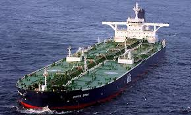
Crude Oil TankerNigeria Bonny Light Crude Oil (BLCO, FLCO and ALCO, etc): We sell mostly on FOB, CIF, TTO and TTT/STS Basis.
Automotive Gas Oil (AGO) and D2: We sell mostly on CIF and TTT/STS.

Bitumen: We sell on CIF and FOB Basis

Marine Equipments/Machines:

We sell and lease all kinds of marine equipments/machines.

Well sell and lease all kinds of vessel e.g. oil tanker, cargo vessel, crew vessel etc.

Marine DredgesWe sell and lease tug-boats of all kinds.

We sell and lease barges and sea going barges.

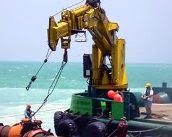
We sell and lease dredgers, swamp-buggy, cranes of all kinds, tug-boats of all kinds bulldozers, etc.

Crushing machine of all kinds and screening plant: We sell on CIF and FOB Basis.

Steel and Metal:

We sell steel pipes and tubes of all kinds

We sell metals of all kinds.

GENERAL CONTRACTORS:

We are also into real estate, transportation, communications and more.


Showing posts with label Oil Trading Business. Show all posts

Friday, 15 August 2014

GeoPetro Resources starts operations in Texas' Madisonville field

GeoPetro Resources reported that reworking and testing operations commenced in March 2014 in the Madisonville field, Madison County, Texas.


The Company initiated reworking and testing operations on the Ruby Magness #1 and the Angela Farris Fannin #1 wells in anticipation of restoring production in the Madisonville field. These two wells are expected to recommence production by mid-year 2014.


The Company owns a 100% working interest in certain leases in the Rodessa Formation interval within the Madisonville Field.The Company also owns a 100% interest in a natural gas treatment plant and related gas gathering pipelines and related facilities (collectively, the plant).The plant has a design capacity to treat 18 Mcf of natural gas per day.


The Company is currently conducting additional operations and work programs to restore its production from the Ruby Magness #1 and Angela Farris Fannin #1 wells. The Company also plans to further increase production in the Madisonville Field by performing workover operations in the Mitchell #1 and Wilson #1 wells in 2014.


Addressing the positive developments at the Madisonville Project, GeoPetro' s President and CEO, Stuart J. Doshi commented, "We are particularly pleased with the commencement of operations at Madisonville Field which represents a significant milestone for the Company.The recent strengthening of natural gas prices from the 10-year lows experienced over the previous two years provides us with an opportunity to position the Company to re-establish production and generate revenues and positive cash flow for the Company by not only bringing the Magness #1 and Fannin #1 wells online, but also further enhancing production by performing workovers at the Mitchell #1 and the Wilson #1 wells.Additionally, the Company continues to be focused on securing an industry partner to undertake the drilling of a deep well to test six highly prospective zones in the Madisonville Field.Our 3-D seismic shows a very attractive structural closure with a high potential for a major discovery."


The Madisonville Field has been a prolific producer of oil and natural gas.The Rodessa and shallower zones have to date produced in excess of 30 MMbbl of oil and 100 Bcf of natural gas.The six zones below the Rodessa Formation have potential recoverable reserves of approximately 1 Tcf of natural gas.


Providing useful resources, articles and writings on crude oil, other petroleum products, energy and gas. By Blockline and Associate Ltd Nigeria Ltd, online.

Tuesday, 8 July 2014

Petrobras starts third well at Santos basin’s Sapinhoá field

Petrobras has announced the start-up of well 7-SPH-04-SPS, at a water depth of 2,120 m, in Sapinhoá field, in the Santos basin pre-salt region. This well has an estimated production potential of 26,000 bpd and is interconnected to the FPSO Cidade de São Paulo through the platform connecting system known as BSR (Buoyancy Supported Risers).


This is the third production well of the Sapinhoá Pilot Project and the second to go in operation through the BSR gathering system, following the start-up of well SPS-77A, which has been producing approximately 36,000 bpd since February 18, 2014.


FPSO Cidade de São Paulo has the capacity to process up to 120,000 bpd and has been in operation since January 5, 2013, when it was directly interconnected to well SPS-55. The fourth production well of the project will be interconnected early in the second half of the year. With the start-up of this well, the platform will reach its full output capacity.


Besides the first buoy already installed in Sapinhoá field, three other similar systems have been commissioned for installation in Santos basin pre-salt fields. Of these three, one more will be destined for Sapinhoá field (Sapinhoá Pilot Project - FPSO Cidade de São Paulo) and the other two for Lula field (Lula Nordeste Pilot Project - FPSO Cidade de Paraty). FPSO Cidade de Paraty, with the capacity to process up to 120,000 bpd, went into operation on June 6, 2013, when it was directly interconnected to the output of well LL-11.


Installation of the second buoy, destined for Lula field, was completed in February in less than a third of the time it took to install the first one, due to improvements made to installation processes. Then, on March 9, installation of the rigid steel pipelines to gather the output from two NE Lula wells, through the buoy, was completed.


At this time, installation is underway of the flexible pipelines of well 7-LL-22D-RJS, the first production well to be connected to the Lula NE buoy. This well will go in operation this quarter. Then, two other wells will be interconnected and FPSO Cidade de Paraty will reach its full output capacity in the third quarter of this year.


Two other buoys will be installed in the first half of the year


Operations to interconnect the third buoy in Sapinhoá field are ahead of schedule. The buoy is already submerged and attached to its foundations. Installation work will be completed this quarter.


The fourth and last buoy, designed for Lula field, is already on site and is currently in the initial installation phase, according to schedule. Installation is also expected to be completed this quarter.


Sapinhoá field is operated by Petrobras (45%), in partnership with BG E&P Brasil Ltda (30%) and Repsol Sinopec Brasil S.A. (25%).


Lula field is operated by Petrobras (65%), in partnership with BG E&P Brasil Ltda (25%) and Petrogal Brasil S.A. (10%).


Providing useful resources, articles and writings on crude oil, other petroleum products, energy and gas. By Blockline and Associate Ltd Nigeria Ltd, online.

Monday, 14 April 2014

OPEC to make room for extra oil from Iran, Iraq, Libya

OPEC, which supplies 40% of the world’s oil, will accommodate additional output from members Iraq, Iran and Libya, Secretary-General Abdalla El-Badri said, without explaining how it will do so under the group’s ceiling.


The Organization of Petroleum Exporting Countries will wait until 2015 to discuss output targets with Iraq, which currently operates outside the production-quota system for each of the group’s other 11 member countries, El-Badri told reporters today in Doha, Qatar. OPEC foresees gradual increases from Iraq and Iran, while Libya is capable of boosting output by as much as 1 MMbbl within a month, he said.


“There is no problem for OPEC to absorb any production increment from Iraq and Iran in 2014,” El-Badri said. “When Libya output comes back, we will accommodate it because its production is in our numbers.”


OPEC is set to boost output as its second-biggest producer Iraq pumps at a 35-year high and Libya’s government makes progress in talks with rebels who control fields and export terminals in the country’s oil-rich east. Sanctions on Iran over its nuclear program have constrained the country’s production and sales of crude. OPEC plans to meet on June 11 in Vienna to review its output target, now at 30 MMbpd.


Global demand will increase by 1.1 MMbpd in 2014, and the group will produce up to 30 MMbpd for the rest of the year, El-Badri said. “Of course, ministers can change that when they meet,” he said.


OPEC pumped 30.3 MMbpd in March, data compiled by Bloomberg show.


The group has yet to determine how to make room for potential output increases from Iraq, Iran and Libya, El-Badri said. “We will discuss that when they come to the point to discuss their increase,” he said.


Iraq, with the world’s fifth-largest oil reserves, is rebuilding its energy industry after decades of war and economic sanctions. Helped by investors including Royal Dutch Shell Plc and Exxon Mobil Corp., it leap-frogged Iran in 2012 to rank second in OPEC, after Saudi Arabia. Iraq pumped 3.4 MMbpd in March, according to data compiled by Bloomberg, and targets 9 MMbpd.


Iran raised production to 2.9 MMbpd last month, an increase of 65,000 bbl from February, the data show. Libya, which produced 250,000 bpd in March, holds Africa’s biggest crude reserves. Libya’s government reached an agreement with eastern rebels on April 6 to reopen two oil ports.


OPEC’s spare production capacity is at an adequate level this year, and producers and consumers are happy with current oil prices, El-Badri said. The price for OPEC’s basket of crudes rose $1, or 1%, yesterday to $103.16 a barrel, the group’s secretariat reported today.


The group’s 12 members are Algeria, Angola, Ecuador, Iran, Iraq, Kuwait, Libya, Nigeria, Qatar, Saudi Arabia, the United Arab Emirates and Venezuela.


Providing useful resources, articles and writings on crude oil, other petroleum products, energy and gas. By Blockline and Associate Ltd Nigeria Ltd, online.

Contact Blockline Associate Ltd
Contact Blockline Associate Ltd At Sea

World Energy Production