Blockline And Associate Ltd Blog


Blockline and Associate Ltd are sellers of light crude oil and other petroleum products. We also sell and lease out marine equipments, construction machinery and other equipments.

We sell Crude Oil, D2, AGO and other Petroleum product such as:

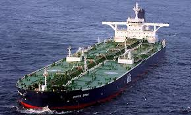
Crude Oil TankerNigeria Bonny Light Crude Oil (BLCO, FLCO and ALCO, etc): We sell mostly on FOB, CIF, TTO and TTT/STS Basis.
Automotive Gas Oil (AGO) and D2: We sell mostly on CIF and TTT/STS.

Bitumen: We sell on CIF and FOB Basis

Marine Equipments/Machines:

We sell and lease all kinds of marine equipments/machines.

Well sell and lease all kinds of vessel e.g. oil tanker, cargo vessel, crew vessel etc.

Marine DredgesWe sell and lease tug-boats of all kinds.

We sell and lease barges and sea going barges.

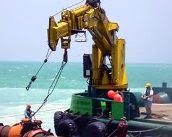
We sell and lease dredgers, swamp-buggy, cranes of all kinds, tug-boats of all kinds bulldozers, etc.

Crushing machine of all kinds and screening plant: We sell on CIF and FOB Basis.

Steel and Metal:

We sell steel pipes and tubes of all kinds

We sell metals of all kinds.

GENERAL CONTRACTORS:

We are also into real estate, transportation, communications and more.


Showing posts with label Bonny Lite. Show all posts

Thursday, 14 August 2014

U.S. Energy Agency sees oil imports falling to zero by 2037

Net oil imports to the U.S. could fall to zero by 2037 because of robust production in areas including North Dakota’s Bakken field and Texas’s Eagle Ford formation, according to a government projection released.


The Energy Information Administration, the branch of the Energy Department that collects and analyzes energy data, said the once-chimerical goal of U.S. energy independence could be within reach in 23 years under a “high-production” estimate contained in an update of its periodic energy forecast.


“This is the first time that a case in the Annual Energy Outlook has projected that net imports’ share of liquid fuels consumption could reach zero,” said John Krohn, a spokesman for the EIA, in an email.


Estimating oil production is a tricky business, particularly for the length of time in EIA’s analysis. Forecasters must make a number of guesses, including the size of oil reserves lying thousands of ft underground, how quickly technology advances, and whether a rise in oil prices can make resources once too costly to produce suddenly economic.


“Forecasts going out 20 years make astrology look like respectable science,” said Stephen Schork, President of Schork Group, a consulting group in Villanova, Pennsylvania. “Ten years ago we were importing natural gas, and now we’re looking at exports. The changes have over the last few years have been dramatic and there’s really no way to predict things more than a couple years in advance.”


Some industry analysts are questioning whether the formula used to calculate oil reserves works for shale formations.The Arps method, named for Jan Arps, a petroleum engineer who invented it in 1945, has been the standard for decades.


John Lee, a University of Houston engineering professor, told Bloomberg News that estimates of billions of barrels of untapped shale oil rely on limited drilling history and may exaggerate future production, raising questions about whether U.S. energy independence is truly in reach. Some companies have lowered forecasts after production didn’t reach anticipated levels.


One thing is undeniable: the U.S. energy picture is changing rapidly. If anything, the EIA is overly pessimistic even in its high-production scenario, said Pavel Molchanov, an analyst at Raymond James Financial.


The St. Petersburg, Florida-based company projects the U.S. will essentially be energy independent by 2020, thanks to an increase in oil and biofuels production and a slight downturn in demand for liquid fuels.


“It’s absolutely night and day from where we were five years ago,” Molchanov said in a phone interview.


Under EIA’s high-resource assessment, it’s most optimistic, production increases to 13 MMbpd over the next two decades, based on more favorable assumptions relating to technological advancements and well productivity.


Production levels never exceed 10 MMbpd under a reference case, which assumes no dramatic changes to drilling activity.


Already net oil imports have fallen to about 5 MMbpd from a peak of almost 13 MMbbl in 2006, thanks in large measure to advances in techniques such as hydraulic fracturing and horizontal drilling in shale rock, which are also known as “tight oil” formations.


Production from tight oil formations has increased from less than 1 MMbpd in 2010 to 3 MMbpd in 2013, according to the EIA.


The EIA also included a low-resource estimate where production rises to 9.1 MMbpd in 2017 before falling to 6.6 MMbpd in 2040.


In the EIA reference case, the net import share of petroleum and other liquids consumed in the U.S. falls to 25% in 2016 and then rises to 32% in 2040.


“The high case is very high,” said Sarah Emerson, managing principal of ESAI Energy in Wakefield, Massachusetts.“Their reference case is reasonable and a lot more likely.”


Guy Caruso, who led the EIA from 2002 to 2008, said he thought production may end up coming in somewhere between the agency’s reference case and its high-end assessment.


More experience drilling in the U.S. shale reserves and new research and development spending will probably increase productivity, said Caruso, now a senior adviser at the Center for Strategic and International Studies, a research group in Washington.


“A lot of things have to go right” for the high-end case to come to fruition, Caruso said in a phone interview.“It’s so early in the game, but it’s not unreasonable to see something like this. We could be pretty low on the learning curve.”


Providing useful resources, articles and writings on crude oil, other petroleum products, energy and gas. By Blockline and Associate Ltd Nigeria Ltd, online.

Friday, 8 August 2014

OPEC will need to pump more oil after March plunge, IEA says

OPEC will need to pump more crude in the second half of the year to meet global demand after its production plunged to a five-month low in March, according to the International Energy Agency.


Supplies from the Organization of Petroleum Exporting Countries “plummeted” by 890,000 bpd to 29.62 MMbpd in March, the Paris-based IEA said in its monthly oil market report. That’s below OPEC’s collective 30 MMbbl production target and means the group will have to increase output in the second half of the year, it said. The agency’s global oil demand growth forecast was little changed.


“OPEC supply actually registered a steep drop in March from February highs, but this setback looks likely to be short-lived,” the IEA, an adviser to oil-consuming nations, said. “Prospects for OPEC output are also on the rise - though not without considerable political risk.”


Brent crude prices have dropped 3.3% this year to trade at about $107.12 a barrel today amid rising U.S. production and signs of slowing emerging economies. The International Monetary Fund cut growth predictions for countries including Brazil, Russia, South Africa and Turkey earlier this month.


“Demand growth is lagging supply,” Andrey Kryuchenkov, an analyst at VTB Capital in London, said in an emailed response to questions. “Despite a higher call on OPEC in the second half, supplies are plentiful. It’s little surprise OPEC supplies slipped in March since demand slows.”


Production from OPEC’s 12 members dropped in March amid declines in Iraq, Saudi Arabia and Libya, the IEA said. The group, which is responsible for about 40% of world oil supplies, pumped 30.51 MMbpd in February.


OPEC will need to provide 30.6 MMbpd of crude in the second half, the agency estimated. That’s an increase of 350,000 bpd from the previous forecast, as the IEA reduced its expectations for oil production from countries including Russia and Kazakhstan.


Oil supplies from nations outside OPEC are forecast to reach 56.2 MMbpd this year, a downward revision of 200,000 bpd from the previous month, the IEA said.


Global demand is seen increasing to 92.7 MMbpd this year, little changed from last month’s report, according to the IEA. The agency trimmed its forecast for Russian oil consumption by 55,000 bpd to 3.5 MMbpd this year as its economy slows after the nation annexed Crimea.


“One month after the events in Crimea, market watchers are taking stock of their impact on oil markets,” the IEA said. “Given the still volatile nature of the situation on the ground, there are more questions than answers.”


In separate report yesterday, OPEC trimmed estimates for the amount of crude it will need to pump this year amid rising U.S. supplies, and predicted that a “supply buffer” will accumulate before demand peaks in the summer.


Providing useful resources, articles and writings on crude oil, other petroleum products, energy and gas. By Blockline and Associate Ltd Nigeria Ltd, online.

Wednesday, 6 August 2014

VNG Norway discovers 226-m hydrocarbon column near Njord field

VNG Norge AS, operator of production licence 586, has concluded the drilling of exploration well 6406/12-3 S. The test results indicate a discovery far larger than expected.


The well was drilled on the Halten Terrace, about 33 km southwest of the Njord field.


The main objective of the well was to test the hydrocarbon potential in the Pil prospect, up-dip from the offset well 6406/12-1 S. The primary reservoir target was Upper Jurassic sandstones of the Rogn and Melke formations.


The well encountered a 91 m gas column and a 135 m oil column in Upper Jurassic sandstones. Preliminary analyses based on extensive coring, wireline logs and pressure data show that the well has encountered sandstones with very good reservoir properties.


An extensive data acquisition program was carried out in the well, including a successful production test. The production rate was 1,067 Sm3 oil per flow day through a 56/64-in. nozzle. The test showed good flow properties and the gas/oil ratio was 152 Sm3/Sm3. Preliminary estimates place the size of the discovery at between 8 and 27 million Sm³ recoverable oil equivalents with a considerable additional upside volume within the Pil closure not proven by the well.


Production licence 586 was awarded on 4 February 2011 (APA 2010) and this was the first well to be drilled in the licence. 6406/12-3 S was drilled to a vertical depth of 3,738 ms below sea level, and was terminated in the Upper Jurassic Melke formation. The water depth is 324 meters. The well will now be permanently plugged and abandoned.


Well 6406/12-3 S was drilled by the Transocean Arctic drilling facility, which will now first drill a a down dip sidetrack to prove up the lateral extent of the Pil reservoir and the upside case.


This will be followed by a further sidetrack to assess the potential of the neighbouring Bue target.


VNG Norge is the operator in PL586 with a 30% share. Partners are Spike Exploration (30 %), Faroe Petroleum Norge (25 %) and Rocksource Exploration Norway (15 %).


Providing useful resources, articles and writings on crude oil, other petroleum products, energy and gas. By Blockline and Associate Ltd Nigeria Ltd, online.

Sunday, 20 July 2014

ConocoPhillips raises Eagle Ford resource estimate

ConocoPhillips has reaffirmed its objective to deliver double-digit returns annually to shareholders at its Analyst Meeting held at the New York Stock Exchange. Members of the company’s executive leadership team outlined ConocoPhillips’ goal to consistently deliver 3 to 5% compound annual growth in production and margins.
 
ConocoPhillips also highlighted its substantial U.S. unconventional position and announced an increase of its estimated resource base in the prolific Eagle Ford play. Based on its prime acreage position and technical knowledge, the company has increased its estimates from 1.8 billion to 2.5 billion bbl of oil in place. Production is also expected to increase from current volumes to more than 250,000 boed by 2017.
 
“ConocoPhillips’ wells in the Eagle Ford have the highest oil rates per well and are leading the industry in value. This is attributable not only to the fact that we are in the best part of the play, but also to our relentless focus on  technical innovation and drilling and completion cost efficiencies,” said Chairman and CEO Ryan Lance. “We are applying these benefits and efficiencies across our unconventional portfolio in the Bakken, Permian, Niobrara, Canada, and outside of North America. We believe our unconventional resource base is unmatched, particularly for a company our size."
 
“Beginning this year, we will be growing production and margins across our diverse asset base, and allocating 95% of our annual capital expenditures to growth projects and programs with margins that are higher than our average margin today. We believe we have the asset base, technical capability, world-class workforce and financial strength to deliver on our unique value proposition,” Lance added.
 
Since 2009, ConocoPhillips has added 6.7 billion boe of resources through a diverse and balanced exploration and appraisal portfolio of high-value opportunities. Among the high-quality prospects are four large U.S. Gulf of Mexico discoveries – Tiber, Gila, Shenandoah and Coronado. Further activity is targeting offshore prospects in Australia, Angola and Senegal; conventional exploration in Norway and Indonesia; and unconventional exploration in North America, Poland and Colombia.
 
In its first two years as an E&P company, ConocoPhillips generated proceeds of $12.4 billion from non-core asset sales, advanced new growth projects, achieved visible margin growth, accessed new organic growth opportunities, participated in successful deepwater Gulf of Mexico discoveries and maintained a strong dividend.
 
Over the next several years, ConocoPhillips plans to execute a disciplined capital program of approximately $16 billion per year and achieve the company’s organic reserve replacement target of more than 100%. The company expects to generate 3 to 5% compound annual production growth and margin growth from major development programs and projects already under way in the U.S. Lower 48, Canadian oil sands, UK and Norwegian North Sea, Malaysia and Australia.


Providing useful resources, articles and writings on crude oil, other petroleum products, energy and gas. By Blockline and Associate Ltd Nigeria Ltd, online.

Sunday, 13 July 2014

Chevron production heads for 8-year low as profit declines

Chevron is on track to post its lowest first quarter production in eight years after bad weather disrupted operations in Central Asia and North America.


Chevron by its market value also signaled that profit for the first three months of the year was the lowest since late 2010, according to a statement. Chevron, which is overseeing the $54 bn Gorgon natural gas export project in Australia, cited currency fluctuations and the falling value of some assets for the decline.


Chevron said it pumped the equivalent of 2.579 MMbpd during January and February. If output persisted at that pace through March, production for the full quarter would have been the lowest for that time of year since 2006.


Chevron is scheduled to disclose results for the entire three month period on May 2.


Before its statement, the company was expected to report full quarter output of 2.61 MMbbl, based on the average of three analysts’ estimates compiled by Bloomberg. That compares with 2.645 MMbbl in the first three months of 2013.


Chevron is accelerating oil exploration from Argentina to China to add reserves and revive output. Chairman and CEO John Watson is spending almost $40 bn this year to find, extract, transport and process oil and gas. Watson’s strategy also calls for auctioning off $10 bn in oilfields and other assets to hone the Chevron’s focus on the highest profit projects.


The statement was released after the close of regular trading in New York, where the shares fell 0.7% to $118.22.


Chevron declined 4.7% this year through the close, after advancing 16% in 2013. In March, Watson cut the company’s long-term production target by 6.1% to the equivalent of 3.1 MMbpd in 2017.


The company’s output fell for a third consecutive year in 2013, the longest streak of declines since the 2001-2004 period, according to data compiled by Bloomberg.


Exxon Mobil is the biggest energy company by market value, followed by Shell.


Providing useful resources, articles and writings on crude oil, other petroleum products, energy and gas. By Blockline and Associate Ltd Nigeria Ltd, online.

Thursday, 10 July 2014

Petronas awards RSC to EQ Petroleum, Uzma Energy Venture

Petronas has awarded a small field risk service contract (SFRSC) to EQ Petroleum Developments Malaysia and Uzma Energy Venture (Sarawak) (Uzma) for the development and production of the Tanjong Baram field, located about 6 km offshore Sarawak.
 
The SFRSC was signed on 27 March in Kuala Lumpur, where Petronas was represented by its V.P. of Petroleum Management Encik Adif Zulkifli, EnQuest by its Head of International Mr Faysal Hamza and Uzma by its CEO Dato’ Kamarul Redzuan Mohamed.
 
Under the terms of the contract, Petronas is the project owner while EnQuest and Uzma are the contractors for this petroleum arrangement.
 
“This SFRSC will see EnQuest and Uzma conduct development and production works at the Tanjong Baram field. The first hydrocarbon from the Tanjong Baram field is expected to be within 11 months from now,” said Adif Zulkifli.
 
Petronas has awarded four RSCs to date, the Berantai field to Petrofac and Sapura Kencana Petroleum in January 2011, the Balai-Bentara cluster off Sarawak to a consortium comprising Roc Oil, Dialog Group and Petronas Carigali in August 2011, the Kapal, Banang and Meranti cluster to Coastal Energy KBM in June 2012 and the Tembikai-Chenang cluster to Vestigo Petroleum in October 2013.


Providing useful resources, articles and writings on crude oil, other petroleum products, energy and gas. By Blockline and Associate Ltd Nigeria Ltd, online.

Contact Blockline Associate Ltd
Contact Blockline Associate Ltd At Sea

World Energy Production