Blockline And Associate Ltd Blog


Blockline and Associate Ltd are sellers of light crude oil and other petroleum products. We also sell and lease out marine equipments, construction machinery and other equipments.

We sell Crude Oil, D2, AGO and other Petroleum product such as:

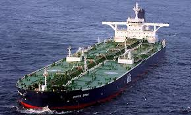
Crude Oil TankerNigeria Bonny Light Crude Oil (BLCO, FLCO and ALCO, etc): We sell mostly on FOB, CIF, TTO and TTT/STS Basis.
Automotive Gas Oil (AGO) and D2: We sell mostly on CIF and TTT/STS.

Bitumen: We sell on CIF and FOB Basis

Marine Equipments/Machines:

We sell and lease all kinds of marine equipments/machines.

Well sell and lease all kinds of vessel e.g. oil tanker, cargo vessel, crew vessel etc.

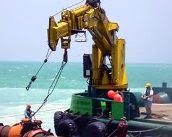
Marine DredgesWe sell and lease tug-boats of all kinds.

We sell and lease barges and sea going barges.

We sell and lease dredgers, swamp-buggy, cranes of all kinds, tug-boats of all kinds bulldozers, etc.

Crushing machine of all kinds and screening plant: We sell on CIF and FOB Basis.

Steel and Metal:

We sell steel pipes and tubes of all kinds

We sell metals of all kinds.

GENERAL CONTRACTORS:

We are also into real estate, transportation, communications and more.


Showing posts with label Crude Oil Trading. Show all posts

Sunday, 17 August 2014

Niobrara oil seen as potential savior for West Coast refiners

Companies from Noble Energy Inc. to Whiting Petroleum Corp. are ramping up output in the Niobrara shale oil play near the Rocky Mountains that may help save U.S. West Coast refiners from dwindling supplies in their own region.


The formation spread across parts of Colorado, Kansas, Nebraska and Wyoming is estimated to hold as much as 2 billion bbl of oil, Energy Information Administration data show. Niobrara’s oil and lease condensate output will reach a record 304,434 bpd this month, the agency said.


The Rocky Mountains play may be a godsend for Western refiners because its crude closely matches the characteristics of oil from the region’s largest domestic supplier, Alaska’s North Slope, where output has declined every year since 2002. A slide in Alaska and California oil production has forced West Coast refiners to increasingly rely on foreign imports and oil shipped by rail from other states.


“We’ve had a number of shipments move by rail, but I don’t think any of it has gone to the West Coast yet,” Gary Willingham, Noble’s senior V.P. of U.S. onshore, said in Denver during a conference on Bakken and Niobrara crudes. “It’s certainly part of our plan to have that flexibility. We want it to go where the demand is and where the best price is.”


The posted price for oil from the Denver-Julesburg basin, where the Niobrara is located, rose $1 to $85.05/bbl Friday, according to the marketing division of Plains All American Pipeline LP.  Alaska North Slope oil rose $1.20 to $107.39/bbl, data compiled at 4:16 p.m. New York time show.


Noble, the largest producer in the Niobrara, expects its output from the basin to surpass 100,000 boed this year and reach 250,000 by 2018, Willingham said at the 2014 DUG Bakken and Niobrara conference. Whiting has three rigs running in its Redtail prospect there and plans to add a fourth in August.


Oil from the Niobrara matches the medium crude Alaska North Slope so well that it may be “demanded by folks on the West Coast,” said Mark Smith, V.P. of development, supply and logistics for Tesoro Corp., the largest refiner in the West.


Niobrara crude “fills the bill” for the West Coast, Jim Volker, Whiting’s CEO, said at the conference. Oil from the formation will have to compete against other Western plays such as the Uinta basin of Utah to supply the region, he said.


Tesoro is developing a terminal at the Port of Vancouver, Washington, with Savage Services Corp. that would take oil off rail cars and load it onto marine vessels for delivery.


“That Niobrara stuff could easily take up space” at the terminal, Smith said.


Wyoming, home to the Guernsey oil-pipeline hub, issued permits last year allowing projects with collectively more than 459,000 bpd of crude trans-loading capacity. It has approved permits for two more sites this year with as much as 146,000 bpd in capacity.


Musket Corp. runs an oil-by-rail terminal in Windsor, Colorado, that began loading unit-trains at the beginning of this year. The White Cliffs pipeline that carries oil from the basin to Cushing, Oklahoma, is scheduled to double capacity to 150,000 bpd this year.


California, home to two-thirds of the West Coast’s refining capacity, received 55,025 bbl of oil by rail from Colorado in December, the most ever for that month, and took in a record 87,951 from the state in May 2013. Colorado oil production reached a record 206,000 bpd in October.


While companies including Noble and Whiting are accelerating drilling in the Niobrara, Continental Resources decided to allocate spending elsewhere this year, said John Kilgallon, the company’s V.P. of investor relations.


“There has been some success by some operators there, but we’re not one of them,” Kilgallon said by telephone March 28.


Providing useful resources, articles and writings on crude oil, other petroleum products, energy and gas. By Blockline and Associate Ltd Nigeria Ltd, online.

Saturday, 16 August 2014

CBM Asia reported plans for commercializing its 705 Bcf resource at Kutai West PSC

CBM Asia reported plans for the Kutai West PSC development. CBM Asia’s primary goal for 2014 is to commercialize the Kutai West Production Sharing Contract (PSC) in East Kalimantan, Indonesia, located near the Bontang LNG export facility. Achieving early-stage commercial production will help unlock the value of this asset, which is situated close to high-priced Asian gas markets.


CBM Asia holds an 18% working interest in the Kutai West PSC, representing 705 Bcf of recoverable prospective resources net to CBM Asia from the total 3.9 Tcf estimated by an independent audit conducted in 2013 by Netherland, Sewell & Associates. Kutai West is regarded as one of the best and commercially most advanced of the more than 50 awarded CBM blocks in Indonesia.


Kutai West is adjacent to the Sanga-Sanga PSC, where VICO (BP and partners) is commercially producing and selling CBM for power generation and gas to the nearby Bontang LNG facility. As VICO notes: “This is the first time in Indonesia that any CBM facilities have produced and sold gas and represents a major milestone in the exploration of CBM potential.”


Kutai West will produce from the same coal seams as at Sanga-Sanga. To date, the company and its partners have drilled four CBM test wells on the block, verifying thick coal seams (average 105 ft) with high gas content (average 300 ft3/ton; dry, ash-free basis) and gas saturation (close to 100%), as well as 5-mD permeability. The KWCBM-01 well is currently being dewatered, venting produced gas from the flare stack, which is a key first step towards larger scale production.


Management’s main focus this year is to initiate commercial gas production at Kutai West with a 5-well pilot, followed by a larger commercial scale 25-well development (total 30 wells). To this end CBM has reached consensus with its partners to sell the produced gas to locally installed gas engine power generation units selling power into the PLN grid and later to feed gas into the gas-short Bontang LNG export network. Anticipated gas prices are $8/Mcf or higher. Bontang exports LNG to Japan and other Asian rim importers, which are critically short of natural gas.


Under Phase 1 four new CBM wells will be drilled near the existing KW-CBM01, forming an effective dewatering pilot on tight 40-acre spacing to accelerate gas production and demonstrate commerciality. Produced gas estimated at 2.0-2.5 MMcfd (gross) would be sold to a power station developer/operator and PLN for on-site power generation at about $8/Mcf. The government of Indonesia strongly supports such commercialization prior to formal Plan of Development (POD) approval. Total capex for Phase 1 is estimated at $7.16 mn, comprising four wells at $1.46 mn/well cost (drilling & completion, water management, and surface facilities) plus $1.32 mn in engineering and overhead costs. An additional $200,000 would be required for field operating expenses during the first year. CBM Asia’s share of the Phase 1 costs is estimated at $2.15 mn.


The 10-MW power station would employ an array of 1-to5-MW reciprocating engines; hundreds of such installations already are in operation throughout Indonesia.The power station would be independently owned and operated, with no capital required from CBM Asia. Drilling and completing the wells would require about two months, plus an additional four months to install and commission the power plant. An updated engineering audit would be conducted to certify proved and probable reserves, with an excellent chance of qualifying the project for low-cost Phase 2 project financing.


Following success in Phase 1 and the approval of the Phase 2 POD, CBM Asia and its partners would utilize two rigs to drill an additional 25 wells (30 total) over a 7-month period. The increased production initially would supply the power station. Pending successful conclusion of a sales agreement, a 12-in., 20-km pipeline would be constructed to the Badak compressor station by a third party under BOO basis and funded via an estimated $0.50/Mcf transport tariff. Total capex for phase 2 is estimated at $36.3 mn with CBM Asia’s share of costs estimated at $8.0 mn. Production estimated at 12.5 MMcfd (gross) would be sold into the Bontang LNG export network at approximately $8/Mcf or more. Note that Bontang is the world’s second largest LNG plant (22.5 mtpa), shipping primarily to Japan, but local  conventional gas supplies are in decline and the facility is currently operating at less than 60% of capacity.
 
“The Kutai West and Sekayu PSC’s both have substantial engineered resources for commercialization, but Kutai West is most viable for near-term commercial development” noted President and CEO Charles Bloomquist. “We are focusing our efforts on achieving commercial production and gas sales at the block as soon as possible, likely before the end of 2014. We estimate that with completion of the Phase 2 development CBM Asia will be operational cash flow positive. Jointly with its partners the company has developed a technical plan and budget for the Kutai West commercial development and will post details in a new presentation on its website in the coming days.”


Providing useful resources, articles and writings on crude oil, other petroleum products, energy and gas. By Blockline and Associate Ltd Nigeria Ltd, online.

Monday, 11 August 2014

AGR wins NCS frame agreement with Premier Oil

AGR has been assigned by Premier Oil to deliver a range of services within the Norwegian Continental Shelf (NCS).


The contract period is for five years plus an additional three years. The scope of the agreement covers well management and well planning services for exploration drilling and field developments. The work scope will encompass delivery of resources, competence and methodology by AGR’s well management team in Norway.
 
Sjur Talstad, AGR’s E.V.P, Norway and Russia, said: “We are pleased to continue the close working relationship with Premier Oil on the Norwegian Continental Shelf (NCS). The activity will be carried out from our fast growing Stavanger office which has an excellent track record of delivering well management and operational HSE support."
 
AGR recently celebrated drilling over 500 well projects in 25 countries for 106 clients - an average of one drilling project commenced every 10 days since 2000. On the NCS, the company has managed over 80 drilling projects on 14 rigs on behalf of 21 operators. Last year, AGR’s Norway team was involved in 15% of exploration wells drilled on the NCS.


Providing useful resources, articles and writings on crude oil, other petroleum products, energy and gas. By Blockline and Associate Ltd Nigeria Ltd, online.

Sunday, 10 August 2014

Crude drops as Libyan rebels hand over control of export ports

Brent and West Texas Intermediate crudes fell for the first time in three days after Libyan rebels surrendered control of two oil ports to the government, enabling the OPEC country to increase exports.


Brent dropped as much as 1.4%. The self-declared Executive Office for Barqa handed over the oil terminals of Hariga and Zueitina overnight, and will relinquish the other two ports they control in two to four weeks, said Ali Al-Hasy, a spokesman for the group. Libya’s output fell to 250,000 bpd in March from 1.4 million bpd a year earlier, according to data compiled by Bloomberg.


“The possibility that Libyan barrels are returning to the market is weighing on oil,” said Gene McGillian, an analyst and broker at Tradition Energy in Stamford, Conn. “Rising supplies will drive the market lower.”


Brent for May settlement slid $1.12, or 1%, to $105.60/bbl at 12:13 p.m. New York time on the London-based ICE Futures Europe exchange. The volume of all futures traded was 31% higher than the 100-day average.


WTI for May delivery decreased 77 cents, or 0.8%, to $100.37/bbl on the New York Mercantile Exchange. Volume was 11% above the 100-day average. The U.S. benchmark grade’s discount to Brent shrank to $5.23 from $5.58 on April 4.


Libyan Ports


Hariga has a capacity of 110,000 bpd, and Zueitina can handle 70,000 bpd, according to IHS Inc. The other two terminals are Es Sider, the nation’s largest port at 340,000 bpd, and the Ras Lanuf terminal with 220,000 bpd.


The port opening “is definitely a bearish development,” said John Kilduff, a partner at Again Capital LLC, a New York- based hedge fund that focuses on energy. “But we have to see if that comes to fruition.”


Libya currently exports about 85,000 bpd of crude from the offshore fields of Jurf and Bouri, which are unaffected by the protests that have disrupted output on land, according to the Oil Ministry.


“The protesters are banned from returning or obstructing work at the ports,” Justice Minister Salah Al-Mirghani said after talks with rebels April 6 in Zueitina.


Libya, the holder of Africa’s biggest crude reserves, has become the smallest producer in the 12-member OPEC, as rebels seeking self-rule in the eastern region of Cyrenaica halted production and shipments.


“If Libya production does increase, it should provide some pressure on Brent relative to WTI,” said Tom Finlon, Jupiter, Florida-based director of Energy Analytics Group LLC.
Gasoline Futures


WTI rose earlier with gasoline futures, which reached a one-week high before both declined again. Gasoline for May delivery slipped 1.66 cents, or 0.6%, to $2.9147/gal. It climbed as much as 0.5% to $2.9461, the most since March 28.


The rebound in WTI was “really led by gasoline,” said Carl Larry, president of Oil Outlooks & Opinions LLC in Houston.


With assistance from Grant Smith, in London, and Maher Chmaytelli, in Dubai.


Providing useful resources, articles and writings on crude oil, other petroleum products, energy and gas. By Blockline and Associate Ltd Nigeria Ltd, online.

Sunday, 3 August 2014

Aker Solutions to supply subsea manifolds for Petrobras pre-salt fields

Aker Solutions won a contract worth more than $300 mn from Petrobras to supply eight manifolds that alternately inject water and gas to increase oil recovery from Brazil' s deepwater offshore fields.


The subsea manifolds, designed for water depths of 2,500 m, will be installed by Petrobras and its partners in deepwater pre-salt field developments.The units have a design life of 30 years and the first is scheduled to be delivered in 2016.
 
"We are pleased to work with Petrobras on its important and technically challenging pre-salt developments," said Oyvind Eriksen, executive chairman of Aker Solutions. "Brazil is a key market for our subsea technology and one of the fastest growing areas in the oil and gas industry."


The order will be executed by Aker Solutions' Brazilian subsea division. The unit last year began work to double its subsea equipment manufacturing capacity at a plant in Curitiba by 2015. About 70% of the contract with Petrobras will be procured and manufactured in Brazil.
 
"Aker Solutions is committed to delivering high local content in Brazil, where demand for complex subsea production equipment is growing," said Luis Araujo, president for Aker Solutions in Brazil.
 
The manifolds will play a key part in the crucial injection process that helps improve recovery from the fields.


Providing useful resources, articles and writings on crude oil, other petroleum products, energy and gas. By Blockline and Associate Ltd Nigeria Ltd, online.

Saturday, 26 July 2014

Shell lifts first crude oil from Majnoon oil field

Shell announced April 7 that the Majnoon oil field it operates, in partnership with South Oil Company (SOC), Petronas and Missan Oil, in Southern Iraq has successfully exported its first shipment of crude oil to Shell trading, a significant milestone for the field.


The achievement comes as production at Majnoon has reached a current average of 210,000 bopd, well in excess of the 175,000 bopd First Commercial Production target, which initiates the commencement of cost recovery and was achieved after extensive rehabilitation works at the field.


Shell and its partners successfully recommenced production from Majnoon in September 2013, following the completion of major overhaul works, including 28 sq km of mine clearance, extensive refurbishment of brownfield facilities to meet safety standards, and the construction of a new greenfield central processing facility - the largest to be built in Iraq in the last decade - to allow for increased production capacity. To date, 18 new wells have been drilled at the field.


Providing useful resources, articles and writings on crude oil, other petroleum products, energy and gas. By Blockline and Associate Ltd Nigeria Ltd, online.

Friday, 25 July 2014

Shell shelves plans to boost Ormen Lange gas output


Royal Dutch Shell Plc postponed a project designed to boost natural gas recovery from its Ormen Lange deposit offshore Norway, citing higher costs and doubts on reserves.


“The oil and gas industry has a cost challenge,” said Odin Estensen, chairman of the Ormen Lange Management Committee, in a statement. “This, in combination with the maturity and complexity of the concepts and the production volume uncertainty, makes the project no longer economically feasible.”


Shell and other oil companies including Statoil ASA are cutting spending amid rising costs and stagnating oil and gas prices. The delay at Ormen Lange, which delivers as much as 20% of the UK’s gas consumption, comes as the standoff between Russia and the European Union over the annexation of Crimea has raised concerns over fuel supplies to Europe.


The delay on the compression project was supported by partners Statoil, Dong Energy A/S and Exxon Mobil Corp. It was opposed by Norway’s state-owned Petoro AS, also a partner. Prime Minister Erna Solberg this month warned companies against “unacceptable” delays to recovery projects, saying they risk damaging the goodwill they enjoy from the government.


Shell shares dropped 0.6% to 2,200 pence as of 10:18 a.m. in London. Statoil fell 0.8% to 165.4 in Oslo.


The partners remain committed to maximizing recovery at Ormen Lange “in a sustainable manner,” said Shell, the operator of Norway’s second-largest gas field.


Norway, western Europe’s largest oil and gas producer, has seen output drop 20% over the past decade. The government is pushing for companies to maximize recovery from existing fields instead of moving on to more profitable projects. Statoil, Norway’s largest producer, has also announced it’s reviewing plans to build a new platform at the North Sea Snorre deposit to extract an additional 300 MMbbl of oil.


Shell said the timing of the Ormen Lange compression project wasn’t critical to the ultimate recovery rate at the field. “We’re fully aligned to the government’s steer to increase the recovery factor,” Kitty Eide, a company spokeswoman, said in an emailed reply to questions.


In a letter to the government in February, Shell said that a tax increase last year on oil and gas companies will make the Ormen Lange project less profitable, echoing other companies that have warned the change would hurt marginal projects.


“It’s not a deciding factor, but did not help the economics of the project,” Eide said. The company declined to provide details on investment or production-volume estimates for the compression project, or when the license partners expected to make a decision on a future project, she said.


Benchmark gas prices in the UK, where Ormen Lange’s production is shipped through the 1,200-km (745 mi) Langeled pipe, the world’s second-longest pipeline, have fallen 24% so far this year.


The field was discovered in the Moere basin of the Norwegian Sea in 1997 and started producing 10 years later. Output reached 21.5 Bcm of gas last year, a fifth of Norway’s total production. Remaining reserves were estimated at 194.5 Bcm of gas at the end of 2013, down from an initial 314.6 Bcm, according to the Norwegian Petroleum Directorate.


The project delay has no implications for current production, Shell’s Eide said.


Troll, Norway’s largest gas field, has remaining reserves of 955 Bcm. Troll produced 29.6 Bcm of the fuel last year.


Shell and its partners had been studying two offshore compression solutions -- either a subsea concept or a platform -- to compensate for declining pressure over time.


Petoro, which manages Norway’s direct stakes in offshore fields, shares Shell’s view that the current concepts for compression were unprofitable, making a postponement reasonable, Sveinung Sletten, a spokesman, said by phone. The company didn’t support the operator’s decision because it lacked clear plans for future compression projects, he said.


“We haven’t been presented with good enough plans for how the operator will continue its work on compression,” he said. “We want a stronger commitment, and we want sufficient resources allocated to the upcoming work to secure the extraction of remaining profitable resources at Ormen Lange.”


Oslo-based Aker Solutions ASA, which designed a pilot project for Ormen Lange seabed compression, said it wouldn’t comment on the internal decision-making process. The company also worked on the world’s first subsea gas compression facility at Statoil’s Aasgard field in the Norwegian Sea.


“Although delayed, subsea compression at Ormen Lange remains an opportunity for us in the future,” Bunny Nooryani, an Aker Solutions spokeswoman, said in an email.


Norwegian weekly Teknisk Ukeblad reported last month that FMC Corp. had beaten Aker Solutions to an initial contract on the Ormen Lange compression system.


Aker Solutions slid 2.3% to 90.3 kroner in Oslo trading.


Providing useful resources, articles and writings on crude oil, other petroleum products, energy and gas. By Blockline and Associate Ltd Nigeria Ltd, online.

Wednesday, 23 July 2014

Statoil to cut oil sands CO2 emissions by 20%

Statoil ASA expects to decrease carbon-dioxide emissions per barrel from its Canadian oil-sands projects by 20% within six years, responding to environmental criticism of the crude production method.


Norway’s biggest energy producer said yesterday that carbon intensity from its oil-sands operations rose 25% from a year earlier to 69.7 kilograms of carbon dioxide per barrel.


Statoil is applying solvents to its steam-assisted techniques and will use valves to better direct steam to areas that need it, Staale Tungesvik, president of Canadian operations, said in a telephone interview. The Stavanger-based company also is considering different drilling techniques and more efficient water-recycling processes.


“The difference between oil sands and conventional oil production is that we use gas to heat water to create steam, so the footprint of CO2 is very much out of the generation of steam,” Tungesvik said. “We believe that we have identified technologies that will help us reach our target of reducing CO2 intensity by 20% by 2020.”


Emissions from Alberta’s oil sands have become a focal point for opposition to Calgary-based TransCanada Corp.’s Keystone XL pipeline, which would carry bitumen from the oil sands to U.S. Gulf Coast refineries. Opponents like billionaire Tom Steyer say the line would encourage companies to exploit the world’s third-largest crude reserves, unlocking vast amounts of carbon and accelerating climate change.


Carbon emissions from the oil sands won’t improve without new government policy, said PJ Partington, an Ottawa-based analyst at the Pembina Institute, an environmental think tank.


“Without more stringent policies to drive innovation and deployment of new technologies, carbon intensity is expected to remain flat for the foreseeable future,” Partington said by phone.


The intensity of greenhouse gases in oil-sands emissions fell 7.7% from 2008 to 2012, the Canadian Association of Petroleum Producers, an industry group, said in a Nov. 5 report.


Oil-sands crude is on average 9% more carbon intensive than the U.S. average on a wells-to-wheels basis, which measures CO2 emissions from the start of oil production through to combustion, according to the CAPP report.


Statoil’s carbon emissions from oil-sands production will likely decline this year, Tungesvik said. “With stable production and new technology, I would expect we’ll have lower numbers this year than we had last year,” he said.


By 2025, the Norwegian company has voluntarily targeted to reduce CO2 intensity at its oil-sands operations by 40%.


“It’s about earning more money,” Tungesvik said. “And we think that should go hand-in-hand to improve environmental impact.”


Providing useful resources, articles and writings on crude oil, other petroleum products, energy and gas. By Blockline and Associate Ltd Nigeria Ltd, online.

Saturday, 12 July 2014

Statoil brings North Sea's Gudrun field on stream

Statoil and its partners, GDF SUEZ and OMV, have started production from the Gudrun oil and gas field in the North Sea.


"Gudrun is the first new Statoil-operated platform to come on stream on the Norwegian continental shelf since 2005. This is a red-letter day for the company," says Arne Sigve Nylund, Statoil' s executive V.P. for the Development and Production Norway business area.


The new field contributes to important production from the Norwegian shelf. Statoil expects to recover 184 million barrels of oil and gas (oil equivalent) from the field.


"Gudrun illustrates how we can maximize value creation and realize new projects on the Norwegian shelf by combining new field developments with existing pipelines and facilities," says Nylund.


The Gudrun investment decision was made during the financial crisis. When the plan for development and operation (PDO) was submitted in 2010, Gudrun was Statoil' s only mega-project (investments in excess of NOK 12 billion). Now Gudrun is the first in a long line of field developments operated by Statoil.


"We have delivered the Gudrun field on time and below the cost estimate in the PDO. Choosing a global strategy for Gudrun has contributed to reducing the costs," says Margareth Øvrum, head of the Technology, Projects and Drilling business area in Statoil.


Gudrun was discovered in 1975. It is a high temperature-high pressure field, and the need for new drilling technology was one of the reasons why these reserves were left in the bank for such a long time. Now Statoil also has available capacity in existing facilities and pipelines.


Oil and gas from Gudrun is sent to Sleipner, where it will be processed before the oil is sent on to KårstØ and the gas to Europe, all through existing pipelines tied in to Sleipner. This allows Statoil to benefit from previous investments made on the Norwegian shelf.


"The Gudrun concept is a win-win situation. By using existing infrastructure, the Gudrun development costs less and Sleipner gains an extra customer. Gudrun' s start-up came at the perfect time," Nylund explained. 


Modifications have also been carried out on Sleipner and at KårstØ as part of the Gudrun project.


Gudrun will be operated from Statoil' s offices at Vestre Svanholmen in Sandnes, and is the first new field Statoil operates from the Stavanger region since Sleipner in 1993.


"It' s good to see a new field joining the old giants - Statfjord, Snorre and Sleipner. Later on, Gina Krog will also come to Operations South. This field will also be tied in to Sleipner - yet another win-win situation," says Nylund.


Providing useful resources, articles and writings on crude oil, other petroleum products, energy and gas. By Blockline and Associate Ltd Nigeria Ltd, online.

Contact Blockline Associate Ltd
Contact Blockline Associate Ltd At Sea

World Energy Production