Blockline And Associate Ltd Blog


Blockline and Associate Ltd are sellers of light crude oil and other petroleum products. We also sell and lease out marine equipments, construction machinery and other equipments.

We sell Crude Oil, D2, AGO and other Petroleum product such as:

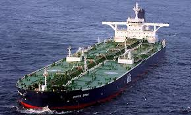
Crude Oil TankerNigeria Bonny Light Crude Oil (BLCO, FLCO and ALCO, etc): We sell mostly on FOB, CIF, TTO and TTT/STS Basis.
Automotive Gas Oil (AGO) and D2: We sell mostly on CIF and TTT/STS.

Bitumen: We sell on CIF and FOB Basis

Marine Equipments/Machines:

We sell and lease all kinds of marine equipments/machines.

Well sell and lease all kinds of vessel e.g. oil tanker, cargo vessel, crew vessel etc.

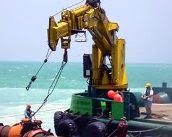
Marine DredgesWe sell and lease tug-boats of all kinds.

We sell and lease barges and sea going barges.

We sell and lease dredgers, swamp-buggy, cranes of all kinds, tug-boats of all kinds bulldozers, etc.

Crushing machine of all kinds and screening plant: We sell on CIF and FOB Basis.

Steel and Metal:

We sell steel pipes and tubes of all kinds

We sell metals of all kinds.

GENERAL CONTRACTORS:

We are also into real estate, transportation, communications and more.


Showing posts with label How To Buy Crude Oil. Show all posts

Friday, 8 August 2014

OPEC will need to pump more oil after March plunge, IEA says

OPEC will need to pump more crude in the second half of the year to meet global demand after its production plunged to a five-month low in March, according to the International Energy Agency.


Supplies from the Organization of Petroleum Exporting Countries “plummeted” by 890,000 bpd to 29.62 MMbpd in March, the Paris-based IEA said in its monthly oil market report. That’s below OPEC’s collective 30 MMbbl production target and means the group will have to increase output in the second half of the year, it said. The agency’s global oil demand growth forecast was little changed.


“OPEC supply actually registered a steep drop in March from February highs, but this setback looks likely to be short-lived,” the IEA, an adviser to oil-consuming nations, said. “Prospects for OPEC output are also on the rise - though not without considerable political risk.”


Brent crude prices have dropped 3.3% this year to trade at about $107.12 a barrel today amid rising U.S. production and signs of slowing emerging economies. The International Monetary Fund cut growth predictions for countries including Brazil, Russia, South Africa and Turkey earlier this month.


“Demand growth is lagging supply,” Andrey Kryuchenkov, an analyst at VTB Capital in London, said in an emailed response to questions. “Despite a higher call on OPEC in the second half, supplies are plentiful. It’s little surprise OPEC supplies slipped in March since demand slows.”


Production from OPEC’s 12 members dropped in March amid declines in Iraq, Saudi Arabia and Libya, the IEA said. The group, which is responsible for about 40% of world oil supplies, pumped 30.51 MMbpd in February.


OPEC will need to provide 30.6 MMbpd of crude in the second half, the agency estimated. That’s an increase of 350,000 bpd from the previous forecast, as the IEA reduced its expectations for oil production from countries including Russia and Kazakhstan.


Oil supplies from nations outside OPEC are forecast to reach 56.2 MMbpd this year, a downward revision of 200,000 bpd from the previous month, the IEA said.


Global demand is seen increasing to 92.7 MMbpd this year, little changed from last month’s report, according to the IEA. The agency trimmed its forecast for Russian oil consumption by 55,000 bpd to 3.5 MMbpd this year as its economy slows after the nation annexed Crimea.


“One month after the events in Crimea, market watchers are taking stock of their impact on oil markets,” the IEA said. “Given the still volatile nature of the situation on the ground, there are more questions than answers.”


In separate report yesterday, OPEC trimmed estimates for the amount of crude it will need to pump this year amid rising U.S. supplies, and predicted that a “supply buffer” will accumulate before demand peaks in the summer.


Providing useful resources, articles and writings on crude oil, other petroleum products, energy and gas. By Blockline and Associate Ltd Nigeria Ltd, online.

Thursday, 7 August 2014

API welcomes Senate letter from Democrats on Keystone

American Petroleum Institute President and CEO Jack Gerard has welcomed a Senate letter sent from nearly a dozen Democrats to President Obama urging him to swiftly approve the Keystone XL pipeline and put thousands of Americans to work while enhancing U.S. energy security.


“The voices of bipartisan support for KXL continue to grow louder with many of those voices coming from the president’s own party,” said Gerard. “President Obama should listen to these voices and that of the majority of Americans who are beyond tired of waiting for this project’s approval.


“Delaying the decision on the Keystone XL sends the wrong signal to the rest of the world. A nation that continues to be indecisive on a simple a matter of our own energy security will have a hard time convincing the rest of the world we can be decisive when it comes to their interests. We’ve got to get focused on Keystone approval. The world is watching. We need to send the signal: We’re serious about our domestic energy policy and our global energy policy. It’s time to approve the Keystone XL pipeline.”


Providing useful resources, articles and writings on crude oil, other petroleum products, energy and gas. By Blockline and Associate Ltd Nigeria Ltd, online.

Monday, 4 August 2014

Canada needs to push harder on Gateway pipeline, Alberta minister says

Canada’s federal government isn’t doing enough to build support for Enbridge Inc.’s proposed pipeline to ship crude from the oil sands to the nation’s Pacific coast, said Alberta Finance Minister Doug Horner.


“The federal government needs to step up here a little bit” to convince aboriginal groups and the general public that the Northern Gateway pipeline is in the nation’s interest, Horner said in an interview at Bloomberg headquarters in New York. “We’ve suggested to them that they may want to get involved.”


Opposition by aboriginal groups and environmentalists is clouding Canada’s plans to develop Alberta’s oil sands, home to the world’s third-largest recoverable crude reserves. Producers such as Royal Dutch Shell Plc and Total SA are counting on projects such as Northern Gateway and TransCanada Corp.’s Keystone XL to ease a transportation bottleneck that has suppressed the price of Canada’s heavy crude, costing the economy C$50 million ($46 million) a day, according to the Canadian Chamber of Commerce.


The federal government should make it clear the pipeline is of national economic importance, said Horner. “You have to remember that a lot of what we do in western Canada creates economic activity and jobs in eastern Canada,” he said.


Harper’s government must decide whether to approve Northern Gateway by June. A regulatory panel said in December the project could move ahead under certain conditions.


British Columbia, the country’s westernmost province, has said it will only back the project if it meets five conditions, including greater engagement with aboriginals and increased financial benefits for the province. Local communities say there’s too much risk and too little benefit to having an oil pipeline cross their region.


Canadian Finance Minister Joe Oliver, who was the country’s natural resources minister until last month, told reporters today the government is constrained in what it can say until the cabinet issues its decision.


Horner’s comments followed a speech by former Canadian prime minister Brian Mulroney in which he called for a “strong national commitment” to export the nation’s natural resources to markets around the world, in particular Asia.


“We cannot sit back, contemplating our collective navel and expect customers to knock on our door,” Mulroney said yesterday. “We have to demonstrate convincingly that we are capable of doing what is required to earn their confidence that we are a reliable, efficient source of supply.”


Horner said he’s “cautiously optimistic” the U.S. will approve TransCanada Corp.’s Keystone XL pipeline, which would link the oil sands to refineries along the Gulf Coast.


President Barack Obama’s administration is reviewing the route, which was first proposed in 2008.


“We are not just focused on Keystone,” Horner said. “We are looking at all three of the opportunities that are there today -- that’s east coast, west coast and to the south.”


Horner also said he is “seriously considering” running to succeed Alison Redford as leader of Alberta’s ruling Progressive Conservative Party. Redford stepped down last month amid questions about her expenses and leadership.


Horner is also speaking today to the Canadian Association of New York.


Providing useful resources, articles and writings on crude oil, other petroleum products, energy and gas. By Blockline and Associate Ltd Nigeria Ltd, online.

Saturday, 2 August 2014

CGG starts 3D multi-client survey offshore Norway

CGG has announced the start of a large BroadSeis/BroadSource 3D multi-client survey in the Northern North Sea offshore Norway. The Horda survey will be the largest broadband multi-client program CGG has acquired in NW Europe as well as the largest multi-client 3D survey ever shot by any company in Norway.


Extending from the Horda platform in the southeast to the Sogn Graben in the north, the 19,000 sq km survey program includes the entire quadrant 35 and large parts of quadrant 31, 32 and 36 and covers more than 80 production licences such as Troll, Brage, Fram and Gjoa.


The survey is being acquired by the Viking Vanquish, and a second vessel will join later in the season. The acquisition program will continue in 2015.


Following several recent discoveries the greater Horda area has become an area of high exploration activity. The survey program’s main objective is to provide a large, uniform dataset with increased seismic resolution, which will offer a platform to improve industry understanding of the regional geology.


The survey has received high prefunding from the industry. Early participants have had the option to recommend priority areas and will also be invited to monitor the data processing which will be conducted in CGG’s Oslo subsurface imaging center.


Jean-Georges Malcor, CEO, CGG, said: “CGG is deploying its latest broadband acquisition and subsurface imaging technology on a seismic project of this magnitude in order to meet the industry’s need for state-of-the-art broadband data delivered in a cost-effective manner for  a large area offshore Norway where no equivalent data of this quality exists. The Horda project has already been well received among the key players in the Northern North Sea and we expect the survey to generate a significant uplift in data quality and provide a valuable tool for all stages of ongoing and future E&P activity in the region.”


Providing useful resources, articles and writings on crude oil, other petroleum products, energy and gas. By Blockline and Associate Ltd Nigeria Ltd, online.

Thursday, 31 July 2014

American Sands Energy acquires pilot plant for water-free extraction process

American Sands Energy Corp., an oil sands exploration and development company operating in Utah, has completed the purchase of its pilot plant, used to demonstrate its water-free extraction of bitumen, or heavy oil, from leased oil sands deposits the firm intends to mine. The agreement with Elemax, Inc., included a combination of cash and stock to purchase the trailer-mounted mobile oil recovery system.


The pilot plant, which the company has successfully used to process up to 1 ton of oil sand per hour over multiple days, will be used by American Sands to evaluate other opportunities for hydrocarbon recovery projects, while the company moves toward initial production at its Sunnyside location.


Will Gibbs, chairman and CEO, said that the pilot plant “uses no water, consumes 60% less energy than traditional oil sands mining operations, requires no tailing ponds and produces no toxic byproducts.”


Gibbs added that, going forward, "In addition to the pilot plant being the engineering model for our initial planned 5,000 bpd plant in Utah, we also plan to work with industry partners around the world that can utilize our scalable technology to extract oil from solid materials such as oil sands, oil shale and other substances."


Providing useful resources, articles and writings on crude oil, other petroleum products, energy and gas. By Blockline and Associate Ltd Nigeria Ltd, online.

Tuesday, 15 July 2014

Gazprom Neft selects contractor for Badra oil field

Gazprom Neft, operator of the Badra oilfield development project, has appointed a contractor to lay the pipeline connecting the field to the power station in Zubaidiah, Wasit Province. The tender was won by Pakistani company Techno Engineering Services (Pvt.) Ltd.


In line with the contract, Techno Engineering Services will produce the designs, supply the equipment and materials, and carry out construction of the pipeline. The pipeline - which will be nearly 100-km long and have a daily capacity of 4.4 million cubic meters (circa 1.6 Bcm per year) - is scheduled to begin operations in 2015.


Under Gazprom Neft’s contract with the Iraqi government for the development of the Badra oil field, investors are to be compensated for costs related to infrastructure construction.


Gas supply from the Badra oil field will enhance the Zubaidiah power station’s daily power output and provide a 24-hour power supply to the city of Kut, which currently has electricity supplied for only 16 hours per day. Some of the extracted gas will be used to provide electricity to the Badra oil fields themselves.


In March, Gazprom Neft completed testing on a second well at Badra. The laying and testing of the oil pipeline to the Gharraf oilfield was completed in February, connecting the section to Iraq’s main pipeline system. The construction of the first phase of a central gathering station point with a capacity of 60,000 bpd is nearing completion. Work has also started on a gas treatment plant with the capacity to process 1.5 Bcm per year.


Providing useful resources, articles and writings on crude oil, other petroleum products, energy and gas. By Blockline and Associate Ltd Nigeria Ltd, online.

Monday, 14 July 2014

Petronas launches hull of its first floating LNG facility

Petronas has launched the hull of its first floating LNG (PFLNG 1) facility at the Daewoo Shipbuilding & Marine Engineering (DSME) shipyard in Okpo, South Korea. The facility, scheduled to be completed in Quarter 4 of 2015, will be the world’s first floating LNG facility in operation.
 
The launch, which took place on April 5, 2014, saw the 365 m long hull equivalent to three NFL football fields in length float out at a dock and launched to anchor at a quayside of DSME shipyard where the facility is being constructed.This phase marks another milestone in the development of the facility and signifies the near completion of hull construction works, less than 10 months since the cutting of the first steel in June 2013.
 
Petronas’ VP Datuk Abdullah Karim said, “It is an impressive achievement that we launch the hull within a short time frame following the keel laying process that began on 6 January 2014.In addition, the project has also achieved more than 5.5 million total safe man-hours since the project commenced in March 2012, with no occurrence of loss time incidents at the project site.”
 
“Petronas is currently working closely with its strategic partners, Technip and Daewoo Shipbuilding & Marine Engineering to ensure that the project is delivered safely, in accordance to project specification and quality, within cost and on schedule,” he added.
 
The PFLNG1 vessel, also known as PFLNG SATU, will be moored in Malaysia’s Kanowit gas field, 180 km offshore Sarawak and will produce 1.2 mtpy of LNG.It will play a significant role in Petronas’ efforts to unlock the gas reserves in Malaysia' s remote and stranded fields currently deemed uneconomical to develop and evacuate and will help meet the growing demand for gas.
 
The floating LNG facility is expected to change the landscape of the LNG business where the liquefaction, production, storage and offloading processes of LNG previously only possible at onshore plants will now be able to be carried out hundreds of km away from land and closer to the offshore gas fields.The facility can also be the solution for early monetisation and more agile LNG production.


Providing useful resources, articles and writings on crude oil, other petroleum products, energy and gas. By Blockline and Associate Ltd Nigeria Ltd, online.

Contact Blockline Associate Ltd
Contact Blockline Associate Ltd At Sea

World Energy Production