Blockline And Associate Ltd Blog


Blockline and Associate Ltd are sellers of light crude oil and other petroleum products. We also sell and lease out marine equipments, construction machinery and other equipments.

We sell Crude Oil, D2, AGO and other Petroleum product such as:

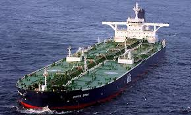
Crude Oil TankerNigeria Bonny Light Crude Oil (BLCO, FLCO and ALCO, etc): We sell mostly on FOB, CIF, TTO and TTT/STS Basis.

Automotive Gas Oil (AGO) and D2: We sell mostly on CIF and TTT/STS.

Bitumen: We sell on CIF and FOB Basis

Marine Equipments/Machines:

We sell and lease all kinds of marine equipments/machines.

Well sell and lease all kinds of vessel e.g. oil tanker, cargo vessel, crew vessel etc.

Marine DredgesWe sell and lease tug-boats of all kinds.

We sell and lease barges and sea going barges.

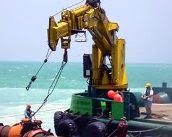
We sell and lease dredgers, swamp-buggy, cranes of all kinds, tug-boats of all kinds bulldozers, etc.

Crushing machine of all kinds and screening plant: We sell on CIF and FOB Basis.

Steel and Metal:

We sell steel pipes and tubes of all kinds

We sell metals of all kinds.

GENERAL CONTRACTORS:

We are also into real estate, transportation, communications and more.


Showing posts with label The Oil Business. Show all posts

Sunday, 3 August 2014

Aker Solutions to supply subsea manifolds for Petrobras pre-salt fields

Aker Solutions won a contract worth more than $300 mn from Petrobras to supply eight manifolds that alternately inject water and gas to increase oil recovery from Brazil' s deepwater offshore fields.


The subsea manifolds, designed for water depths of 2,500 m, will be installed by Petrobras and its partners in deepwater pre-salt field developments.The units have a design life of 30 years and the first is scheduled to be delivered in 2016.
 
"We are pleased to work with Petrobras on its important and technically challenging pre-salt developments," said Oyvind Eriksen, executive chairman of Aker Solutions. "Brazil is a key market for our subsea technology and one of the fastest growing areas in the oil and gas industry."


The order will be executed by Aker Solutions' Brazilian subsea division. The unit last year began work to double its subsea equipment manufacturing capacity at a plant in Curitiba by 2015. About 70% of the contract with Petrobras will be procured and manufactured in Brazil.
 
"Aker Solutions is committed to delivering high local content in Brazil, where demand for complex subsea production equipment is growing," said Luis Araujo, president for Aker Solutions in Brazil.
 
The manifolds will play a key part in the crucial injection process that helps improve recovery from the fields.


Providing useful resources, articles and writings on crude oil, other petroleum products, energy and gas. By Blockline and Associate Ltd Nigeria Ltd, online.

Monday, 28 July 2014

Delineation of the 6407/1-6 S gas/condensate discovery near in the Norwegian Sea

Wintershall Norge, operator of production licence 475, has concluded the drilling of appraisal wells 6407/1-7 and 6407/1-7 A.


The wells were drilled about 8 km northeast of the Tyrihans field and 5 km northeast of the 6407/1-6 S gas condensate discovery in production licence 475. The reservoir in this discovery consists of thin sandstone layers from the Lange formation in the Lower Cretaceous. The discovery was made in January 2013. The resource estimate for the discovery was then between 3 and 20 million standard cubic meter of recoverable oil equivalents.


The objective of well 6407/1-7 was to delineate the 6407/1-6 gas/condensate discovery higher up in the structure. A new appraisal well, 6407/1-7 A, was therefore drilled downflank to investigate reservoir thickness and lithology.


Well 6407/1-7 proved gas/condensate in two sandstone intervals with a net vertical thickness of 12 m and a gross reservoir thickness of 16 m. Well 6407/1-7 A proved gas/condensate in two sandstone intervals with a vertical thickness of 7 m and a gross reservoir thickness of 13 m.


The difference in pressure measurements between wells 6407/1-7, 6407/1-7 A and the discovery well 6407/1-6 S indicates that there is no communication between the appraisal wells and the 6407/1-6 S discovery. Well 6407/1-7 has therefore proven a separate discovery, and will be reclassified as a wildcat well.


Preliminary estimates of the size of the new gas/condensate discovery range from 1 to 4 million standard cubic meter of recoverable oil equivalents.


The resource estimate for the 6407/1-6 S gas/condensate discovery has now been downgraded to between 1 and 6 million standard cubic meter of recoverable oil equivalents. The licensees will consider the discoveries in conjunction with other nearby discoveries as regards future development.


This is the second and third exploration well in production licence 475. The production licence was awarded on 29 February 2008 (APA 2007).


Wells 6407/1-7 and 6407/1-7 A were drilled to vertical depths of 3,345 and 3,311 m, respectively, below the sea surface, the latter with a measured depth of 3,571 m. Both wells were terminated in the Lange formation in the Early Cretaceous. Water depth at the site is 280 m. The well has been permanently plugged and abandoned.


Wells 6407/1-7 and 6407/1-7 A were drilled by the Borgland Dolphin drilling facility, which will now proceed to production licence 550 in the northern part of the North Sea to drill wildcat well  31/2-21 S, where Tullow Oil Norge is the operator.


Providing useful resources, articles and writings on crude oil, other petroleum products, energy and gas. By Blockline and Associate Ltd Nigeria Ltd, online.

Monday, 14 July 2014

Petronas launches hull of its first floating LNG facility

Petronas has launched the hull of its first floating LNG (PFLNG 1) facility at the Daewoo Shipbuilding & Marine Engineering (DSME) shipyard in Okpo, South Korea. The facility, scheduled to be completed in Quarter 4 of 2015, will be the world’s first floating LNG facility in operation.
 
The launch, which took place on April 5, 2014, saw the 365 m long hull equivalent to three NFL football fields in length float out at a dock and launched to anchor at a quayside of DSME shipyard where the facility is being constructed.This phase marks another milestone in the development of the facility and signifies the near completion of hull construction works, less than 10 months since the cutting of the first steel in June 2013.
 
Petronas’ VP Datuk Abdullah Karim said, “It is an impressive achievement that we launch the hull within a short time frame following the keel laying process that began on 6 January 2014.In addition, the project has also achieved more than 5.5 million total safe man-hours since the project commenced in March 2012, with no occurrence of loss time incidents at the project site.”
 
“Petronas is currently working closely with its strategic partners, Technip and Daewoo Shipbuilding & Marine Engineering to ensure that the project is delivered safely, in accordance to project specification and quality, within cost and on schedule,” he added.
 
The PFLNG1 vessel, also known as PFLNG SATU, will be moored in Malaysia’s Kanowit gas field, 180 km offshore Sarawak and will produce 1.2 mtpy of LNG.It will play a significant role in Petronas’ efforts to unlock the gas reserves in Malaysia' s remote and stranded fields currently deemed uneconomical to develop and evacuate and will help meet the growing demand for gas.
 
The floating LNG facility is expected to change the landscape of the LNG business where the liquefaction, production, storage and offloading processes of LNG previously only possible at onshore plants will now be able to be carried out hundreds of km away from land and closer to the offshore gas fields.The facility can also be the solution for early monetisation and more agile LNG production.


Providing useful resources, articles and writings on crude oil, other petroleum products, energy and gas. By Blockline and Associate Ltd Nigeria Ltd, online.

Encana to sell U.S. LNG assets to Stabilis Energy

Stabilis Energy has signed a definitive agreement to purchase substantially all of the U.S. based assets of Encana Natural Gas Inc. (ENGI).


Denver-based ENGI is a leading distributor of LNG fuel to domestic high horsepower engine operators in the oilfield, mining, rail, marine, over the road transportation, and industrial sectors. ENGI is a subsidiary of Encana Corporation. The transaction is scheduled to close on April 30, 2014.


"We are proud to announce the addition of Encana Natural Gas Inc.' s people, assets, and customer relationships to Stabilis Energy," said Casey Crenshaw, President and CEO of Stabilis Energy.


In addition to adding ENGI' s staff, Stabilis has agreed to purchase its fleet of cryogenic rolling stock assets including storage and regasification trailers, mobile fueling units, and other related equipment. Stabilis will fulfill all of ENGI' s existing customer obligations including its existing contracts, subject to customer consent.


Stabilis plans to open its first LNG production facility in George West, Texas, in January 2015 to service oilfield customers in the Eagle Ford shale. The facility is being built as part of a previously announced venture with Flint Hills Resources LLC to build up to five LNG production facilities that target oilfield customers.


The George West facility is under construction now and will be able to produce approximately 100,000 LNG gallons per day when complete. Other targeted LNG liquefaction plant locations include West Texas, North Dakota, and other major oilfield regions. Stabilis also will continue to source fuel from ENGI' s large existing third-party supply network.


"Encana is pleased that Stabilis Energy will carry on the outstanding LNG business that our Natural Gas team has worked hard to build over the past several years," said David Hill, executive V.P. of Encana Corporation. "Encana believes that natural gas has a bright future as a domestic fuel source for high horsepower engines and that LNG will be an important part of this value chain." Encana will remain a customer of Stabilis Energy for LNG.


Providing useful resources, articles and writings on crude oil, other petroleum products, energy and gas. By Blockline and Associate Ltd Nigeria Ltd, online.

Sunday, 6 July 2014

Regulators to require two-person crews on crude trains

U.S. regulators, acting after an oil-train derailment last year ignited a fireball that killed 47 people in Canada, said they intend to require at least two crew members for crude shipments, a proposal opposed by the railroads.


The Federal Railroad Administration also will establish minimum crew size standard for most freight trains and passenger rail lines, the agency said in a statement.


“We are committed to taking the necessary steps to assure the safety of those who work for railroads and shippers, and the residents and communities along shipping routes,” Transportation Secretary Anthony Foxx said in a statement.


The agency is acting after a train that was operated by one person was left unattended for the night in July and rolled into the center of Lac-Megantic, triggering a fatal explosion that destroyed half the town.


The Association of American Railroads, whose members include Berkshire Hathaway Inc.’s BNSF, said large railroads already run oil trains with at least two crew members.


Nevertheless, Edward Hamberger, the group’s CEO, said the Federal Railroad Administration “has never shared an iota of data that shows or proves two-person crews are safer.”


“If a regulation is proposed, then the least that can be expected is that a federal agency should back it up with grounded data that justifies the recommend rule,” Hamberger said in a statement.


FRA administrator Joseph Szabo said in the agency’s statement that two-person crews would improve the safe transport of crude oil.


Crude-by-rail shipments have soared as oil drillers employ new technologies to crack open and free oil and gas from shale formations at a faster pace than pipelines can handle.


Canadian investigators found that the brakes on the Quebec train weren’t applied with enough force. Canadian regulators have since banned one-person train crews when hauling hazardous material.


“Whether a railroad is carrying crude oil through towns across America, or people taking a well-earned vacation or commuting to work, we need to make sure people are safe, whether on the train and near the tracks,” said Senator Patty Murray, a Washington Democrat.


Murray is the chairman of the Senate Appropriations transportation subcommittee, which is holding a hearing on rail safety today.


Previously, the Transportation Department ordered energy companies using rail to ship oil to test the chemical composition of all crude before loading it on tank cars. It is also studying whether rail cars carrying crude need to be made more robust to lower the risks a derailment will cause an explosion.


Foxx told the subcommittee the oil industry has provided a minimal amount of data on the characteristics of oil from North Dakota’s Bakken shale region, which is slowing down efforts to improve the safety of transporting the fuel. Bakken crude may be more volatile than other types of oil.


Providing useful resources, articles and writings on crude oil, other petroleum products, energy and gas. By Blockline and Associate Ltd Nigeria Ltd, online.

Contact Blockline Associate Ltd
Contact Blockline Associate Ltd At Sea

World Energy Production