
Blockline And Associate Ltd Blog


Blockline and Associate Ltd are sellers of light crude oil and other petroleum products. We also sell and lease out marine equipments, construction machinery and other equipments.

We sell Crude Oil, D2, AGO and other Petroleum product such as:

Crude Oil TankerNigeria Bonny Light Crude Oil (BLCO, FLCO and ALCO, etc): We sell mostly on FOB, CIF, TTO and TTT/STS Basis.
Automotive Gas Oil (AGO) and D2: We sell mostly on CIF and TTT/STS.

Bitumen: We sell on CIF and FOB Basis

Marine Equipments/Machines:

We sell and lease all kinds of marine equipments/machines.

Well sell and lease all kinds of vessel e.g. oil tanker, cargo vessel, crew vessel etc.

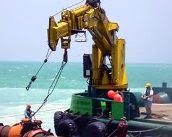
Marine DredgesWe sell and lease tug-boats of all kinds.

We sell and lease barges and sea going barges.

We sell and lease dredgers, swamp-buggy, cranes of all kinds, tug-boats of all kinds bulldozers, etc.

Crushing machine of all kinds and screening plant: We sell on CIF and FOB Basis.

Steel and Metal:

We sell steel pipes and tubes of all kinds

We sell metals of all kinds.

GENERAL CONTRACTORS:

We are also into real estate, transportation, communications and more.


Showing posts with label Gas Oil Trading. Show all posts

Wednesday, 13 August 2014

Emerson’s new ultrasonic flow meters improve accuracy

Emerson Process Management has introduced new Daniel multi-path gas and liquid ultrasonic meters that feature a next-generation electronics platform.


The accuracy, line size breadth, and flexibility make the new JuniorSonic one-path (3411) or two-path (3412), and SeniorSonic four-path (3414) gas ultrasonic meters ideal for a number of flow measurement applications. In addition, the new four-path (3814) liquid ultrasonic meter expands on the functionality and performance of its predecessor, the 3804 liquid ultrasonic meter, to offer improved reliability for custody transfer applications.


With faster flow sampling rates, the new electronics platform significantly increases the data set used to calculate average velocity, allowing rapid recognition of changing flow dynamics. Users will have access to high-volume data capture as well as detailed flow parameters, including pressure, temperature, and gas composition, allowing the meter to act as a redundant flow computer.


Improved calculations for auditing or invoice resolution are enabled by the electronics’ fast delivery of key data from the meter’s audit trail. The audit trail complies with American Petroleum Institute Standard 21.1, and is supported by a standard 128 MB non-volatile memory. Access to alarms, events and configuration changes is provided in a matter of seconds.


Additionally, the meters’ electronics feature a compact circuit board for increased reliability and maintainability, simplifying field removal and reinstallation. The electronics retrofit Daniel legacy ultrasonic meters and are expandable, enabling future upgrades to help meet changing customer needs. The electronics support remote access as well as true 100BaseT Fast Ethernet connectivity to facilitate enterprise-wide communication and integration.


To further improve reliability and uptime, each Daniel gas ultrasonic meter is supplied with new, rugged T-20 Series transducers that are engineered for wet, rich and/or dirty gas applications.  The transducers facilitate troubleshooting by enabling operators to quickly detect and isolate problems, preventing unnecessary depressurization of the meter.


The new Daniel gas and liquid ultrasonic meters are also equipped with an updated version of MeterLink (v1.10), a configuration and diagnostic software that utilizes an intuitive interface to improve overall functionality and ease of use.  MeterLink displays abnormal flow profiles, upstream blockage, deposit build-up within the meter, and the existence of liquid hydrocarbon in gas.


Providing useful resources, articles and writings on crude oil, other petroleum products, energy and gas. By Blockline and Associate Ltd Nigeria Ltd, online.

Sunday, 10 August 2014

Crude drops as Libyan rebels hand over control of export ports

Brent and West Texas Intermediate crudes fell for the first time in three days after Libyan rebels surrendered control of two oil ports to the government, enabling the OPEC country to increase exports.


Brent dropped as much as 1.4%. The self-declared Executive Office for Barqa handed over the oil terminals of Hariga and Zueitina overnight, and will relinquish the other two ports they control in two to four weeks, said Ali Al-Hasy, a spokesman for the group. Libya’s output fell to 250,000 bpd in March from 1.4 million bpd a year earlier, according to data compiled by Bloomberg.


“The possibility that Libyan barrels are returning to the market is weighing on oil,” said Gene McGillian, an analyst and broker at Tradition Energy in Stamford, Conn. “Rising supplies will drive the market lower.”


Brent for May settlement slid $1.12, or 1%, to $105.60/bbl at 12:13 p.m. New York time on the London-based ICE Futures Europe exchange. The volume of all futures traded was 31% higher than the 100-day average.


WTI for May delivery decreased 77 cents, or 0.8%, to $100.37/bbl on the New York Mercantile Exchange. Volume was 11% above the 100-day average. The U.S. benchmark grade’s discount to Brent shrank to $5.23 from $5.58 on April 4.


Libyan Ports


Hariga has a capacity of 110,000 bpd, and Zueitina can handle 70,000 bpd, according to IHS Inc. The other two terminals are Es Sider, the nation’s largest port at 340,000 bpd, and the Ras Lanuf terminal with 220,000 bpd.


The port opening “is definitely a bearish development,” said John Kilduff, a partner at Again Capital LLC, a New York- based hedge fund that focuses on energy. “But we have to see if that comes to fruition.”


Libya currently exports about 85,000 bpd of crude from the offshore fields of Jurf and Bouri, which are unaffected by the protests that have disrupted output on land, according to the Oil Ministry.


“The protesters are banned from returning or obstructing work at the ports,” Justice Minister Salah Al-Mirghani said after talks with rebels April 6 in Zueitina.


Libya, the holder of Africa’s biggest crude reserves, has become the smallest producer in the 12-member OPEC, as rebels seeking self-rule in the eastern region of Cyrenaica halted production and shipments.


“If Libya production does increase, it should provide some pressure on Brent relative to WTI,” said Tom Finlon, Jupiter, Florida-based director of Energy Analytics Group LLC.
Gasoline Futures


WTI rose earlier with gasoline futures, which reached a one-week high before both declined again. Gasoline for May delivery slipped 1.66 cents, or 0.6%, to $2.9147/gal. It climbed as much as 0.5% to $2.9461, the most since March 28.


The rebound in WTI was “really led by gasoline,” said Carl Larry, president of Oil Outlooks & Opinions LLC in Houston.


With assistance from Grant Smith, in London, and Maher Chmaytelli, in Dubai.


Providing useful resources, articles and writings on crude oil, other petroleum products, energy and gas. By Blockline and Associate Ltd Nigeria Ltd, online.

Wednesday, 6 August 2014

VNG Norway discovers 226-m hydrocarbon column near Njord field

VNG Norge AS, operator of production licence 586, has concluded the drilling of exploration well 6406/12-3 S. The test results indicate a discovery far larger than expected.


The well was drilled on the Halten Terrace, about 33 km southwest of the Njord field.


The main objective of the well was to test the hydrocarbon potential in the Pil prospect, up-dip from the offset well 6406/12-1 S. The primary reservoir target was Upper Jurassic sandstones of the Rogn and Melke formations.


The well encountered a 91 m gas column and a 135 m oil column in Upper Jurassic sandstones. Preliminary analyses based on extensive coring, wireline logs and pressure data show that the well has encountered sandstones with very good reservoir properties.


An extensive data acquisition program was carried out in the well, including a successful production test. The production rate was 1,067 Sm3 oil per flow day through a 56/64-in. nozzle. The test showed good flow properties and the gas/oil ratio was 152 Sm3/Sm3. Preliminary estimates place the size of the discovery at between 8 and 27 million Sm³ recoverable oil equivalents with a considerable additional upside volume within the Pil closure not proven by the well.


Production licence 586 was awarded on 4 February 2011 (APA 2010) and this was the first well to be drilled in the licence. 6406/12-3 S was drilled to a vertical depth of 3,738 ms below sea level, and was terminated in the Upper Jurassic Melke formation. The water depth is 324 meters. The well will now be permanently plugged and abandoned.


Well 6406/12-3 S was drilled by the Transocean Arctic drilling facility, which will now first drill a a down dip sidetrack to prove up the lateral extent of the Pil reservoir and the upside case.


This will be followed by a further sidetrack to assess the potential of the neighbouring Bue target.


VNG Norge is the operator in PL586 with a 30% share. Partners are Spike Exploration (30 %), Faroe Petroleum Norge (25 %) and Rocksource Exploration Norway (15 %).


Providing useful resources, articles and writings on crude oil, other petroleum products, energy and gas. By Blockline and Associate Ltd Nigeria Ltd, online.

Sunday, 3 August 2014

Aker Solutions to supply subsea manifolds for Petrobras pre-salt fields

Aker Solutions won a contract worth more than $300 mn from Petrobras to supply eight manifolds that alternately inject water and gas to increase oil recovery from Brazil' s deepwater offshore fields.


The subsea manifolds, designed for water depths of 2,500 m, will be installed by Petrobras and its partners in deepwater pre-salt field developments.The units have a design life of 30 years and the first is scheduled to be delivered in 2016.
 
"We are pleased to work with Petrobras on its important and technically challenging pre-salt developments," said Oyvind Eriksen, executive chairman of Aker Solutions. "Brazil is a key market for our subsea technology and one of the fastest growing areas in the oil and gas industry."


The order will be executed by Aker Solutions' Brazilian subsea division. The unit last year began work to double its subsea equipment manufacturing capacity at a plant in Curitiba by 2015. About 70% of the contract with Petrobras will be procured and manufactured in Brazil.
 
"Aker Solutions is committed to delivering high local content in Brazil, where demand for complex subsea production equipment is growing," said Luis Araujo, president for Aker Solutions in Brazil.
 
The manifolds will play a key part in the crucial injection process that helps improve recovery from the fields.


Providing useful resources, articles and writings on crude oil, other petroleum products, energy and gas. By Blockline and Associate Ltd Nigeria Ltd, online.

Saturday, 19 July 2014

Chevron, YPF continue development of Argentina's Vaca Muerta shale

Chevron Corporation has confirmed that subsidiaries of the company have signed agreements with the Argentine oil company YPF S.A. to continue development of shale oil and gas resources from the Vaca Muerta formation located in the Neuquén province in Argentina.


"This is a significant step in our subsidiaries' joint efforts with YPF to develop one of the most exciting shale plays in the world today," said George Kirkland, vice chairman of Chevron Corporation. "Vaca Muerta could become an important contributor to Chevron' s long term production growth."
 
The agreements build off the progress made with the drilling program begun in 2013 and call for continued investment toward large-scale drilling and production in the 96,000-acre (388-sq km) Loma Campana concession. The agreements also call for exploration of shale oil and gas resources in the 49,400-acre (200-sq km) Narambuena area located about 70 mi (100 km) north of Loma Campana in the Chihuido de la Sierra Negra concession, one of the main producing areas in the Neuquén basin of west-central Argentina.


"YPF is a reliable partner and operator that is advancing the project in the right direction," said Ali Moshiri, president of Chevron Africa and Latin America Exploration and Production Company. "We are pleased with the progress achieved so far and look forward to continuing to provide our technical expertise and investment to help Argentina achieve its goal of energy self-sufficiency."


Providing useful resources, articles and writings on crude oil, other petroleum products, energy and gas. By Blockline and Associate Ltd Nigeria Ltd, online.

Monday, 14 July 2014

Petronas launches hull of its first floating LNG facility

Petronas has launched the hull of its first floating LNG (PFLNG 1) facility at the Daewoo Shipbuilding & Marine Engineering (DSME) shipyard in Okpo, South Korea. The facility, scheduled to be completed in Quarter 4 of 2015, will be the world’s first floating LNG facility in operation.
 
The launch, which took place on April 5, 2014, saw the 365 m long hull equivalent to three NFL football fields in length float out at a dock and launched to anchor at a quayside of DSME shipyard where the facility is being constructed.This phase marks another milestone in the development of the facility and signifies the near completion of hull construction works, less than 10 months since the cutting of the first steel in June 2013.
 
Petronas’ VP Datuk Abdullah Karim said, “It is an impressive achievement that we launch the hull within a short time frame following the keel laying process that began on 6 January 2014.In addition, the project has also achieved more than 5.5 million total safe man-hours since the project commenced in March 2012, with no occurrence of loss time incidents at the project site.”
 
“Petronas is currently working closely with its strategic partners, Technip and Daewoo Shipbuilding & Marine Engineering to ensure that the project is delivered safely, in accordance to project specification and quality, within cost and on schedule,” he added.
 
The PFLNG1 vessel, also known as PFLNG SATU, will be moored in Malaysia’s Kanowit gas field, 180 km offshore Sarawak and will produce 1.2 mtpy of LNG.It will play a significant role in Petronas’ efforts to unlock the gas reserves in Malaysia' s remote and stranded fields currently deemed uneconomical to develop and evacuate and will help meet the growing demand for gas.
 
The floating LNG facility is expected to change the landscape of the LNG business where the liquefaction, production, storage and offloading processes of LNG previously only possible at onshore plants will now be able to be carried out hundreds of km away from land and closer to the offshore gas fields.The facility can also be the solution for early monetisation and more agile LNG production.


Providing useful resources, articles and writings on crude oil, other petroleum products, energy and gas. By Blockline and Associate Ltd Nigeria Ltd, online.

Monday, 14 April 2014

OPEC to make room for extra oil from Iran, Iraq, Libya

OPEC, which supplies 40% of the world’s oil, will accommodate additional output from members Iraq, Iran and Libya, Secretary-General Abdalla El-Badri said, without explaining how it will do so under the group’s ceiling.


The Organization of Petroleum Exporting Countries will wait until 2015 to discuss output targets with Iraq, which currently operates outside the production-quota system for each of the group’s other 11 member countries, El-Badri told reporters today in Doha, Qatar. OPEC foresees gradual increases from Iraq and Iran, while Libya is capable of boosting output by as much as 1 MMbbl within a month, he said.


“There is no problem for OPEC to absorb any production increment from Iraq and Iran in 2014,” El-Badri said. “When Libya output comes back, we will accommodate it because its production is in our numbers.”


OPEC is set to boost output as its second-biggest producer Iraq pumps at a 35-year high and Libya’s government makes progress in talks with rebels who control fields and export terminals in the country’s oil-rich east. Sanctions on Iran over its nuclear program have constrained the country’s production and sales of crude. OPEC plans to meet on June 11 in Vienna to review its output target, now at 30 MMbpd.


Global demand will increase by 1.1 MMbpd in 2014, and the group will produce up to 30 MMbpd for the rest of the year, El-Badri said. “Of course, ministers can change that when they meet,” he said.


OPEC pumped 30.3 MMbpd in March, data compiled by Bloomberg show.


The group has yet to determine how to make room for potential output increases from Iraq, Iran and Libya, El-Badri said. “We will discuss that when they come to the point to discuss their increase,” he said.


Iraq, with the world’s fifth-largest oil reserves, is rebuilding its energy industry after decades of war and economic sanctions. Helped by investors including Royal Dutch Shell Plc and Exxon Mobil Corp., it leap-frogged Iran in 2012 to rank second in OPEC, after Saudi Arabia. Iraq pumped 3.4 MMbpd in March, according to data compiled by Bloomberg, and targets 9 MMbpd.


Iran raised production to 2.9 MMbpd last month, an increase of 65,000 bbl from February, the data show. Libya, which produced 250,000 bpd in March, holds Africa’s biggest crude reserves. Libya’s government reached an agreement with eastern rebels on April 6 to reopen two oil ports.


OPEC’s spare production capacity is at an adequate level this year, and producers and consumers are happy with current oil prices, El-Badri said. The price for OPEC’s basket of crudes rose $1, or 1%, yesterday to $103.16 a barrel, the group’s secretariat reported today.


The group’s 12 members are Algeria, Angola, Ecuador, Iran, Iraq, Kuwait, Libya, Nigeria, Qatar, Saudi Arabia, the United Arab Emirates and Venezuela.


Providing useful resources, articles and writings on crude oil, other petroleum products, energy and gas. By Blockline and Associate Ltd Nigeria Ltd, online.

Contact Blockline Associate Ltd
Contact Blockline Associate Ltd At Sea

World Energy Production