Blockline And Associate Ltd Blog


Blockline and Associate Ltd are sellers of light crude oil and other petroleum products. We also sell and lease out marine equipments, construction machinery and other equipments.

We sell Crude Oil, D2, AGO and other Petroleum product such as:

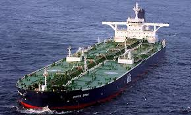
Crude Oil TankerNigeria Bonny Light Crude Oil (BLCO, FLCO and ALCO, etc): We sell mostly on FOB, CIF, TTO and TTT/STS Basis.
Automotive Gas Oil (AGO) and D2: We sell mostly on CIF and TTT/STS.

Bitumen: We sell on CIF and FOB Basis

Marine Equipments/Machines:

We sell and lease all kinds of marine equipments/machines.

Well sell and lease all kinds of vessel e.g. oil tanker, cargo vessel, crew vessel etc.

Marine DredgesWe sell and lease tug-boats of all kinds.

We sell and lease barges and sea going barges.

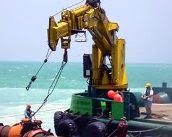
We sell and lease dredgers, swamp-buggy, cranes of all kinds, tug-boats of all kinds bulldozers, etc.

Crushing machine of all kinds and screening plant: We sell on CIF and FOB Basis.

Steel and Metal:

We sell steel pipes and tubes of all kinds

We sell metals of all kinds.

GENERAL CONTRACTORS:

We are also into real estate, transportation, communications and more.


Showing posts with label Blockline and Associated Limited. Show all posts

Thursday, 14 August 2014

U.S. Energy Agency sees oil imports falling to zero by 2037

Net oil imports to the U.S. could fall to zero by 2037 because of robust production in areas including North Dakota’s Bakken field and Texas’s Eagle Ford formation, according to a government projection released.


The Energy Information Administration, the branch of the Energy Department that collects and analyzes energy data, said the once-chimerical goal of U.S. energy independence could be within reach in 23 years under a “high-production” estimate contained in an update of its periodic energy forecast.


“This is the first time that a case in the Annual Energy Outlook has projected that net imports’ share of liquid fuels consumption could reach zero,” said John Krohn, a spokesman for the EIA, in an email.


Estimating oil production is a tricky business, particularly for the length of time in EIA’s analysis. Forecasters must make a number of guesses, including the size of oil reserves lying thousands of ft underground, how quickly technology advances, and whether a rise in oil prices can make resources once too costly to produce suddenly economic.


“Forecasts going out 20 years make astrology look like respectable science,” said Stephen Schork, President of Schork Group, a consulting group in Villanova, Pennsylvania. “Ten years ago we were importing natural gas, and now we’re looking at exports. The changes have over the last few years have been dramatic and there’s really no way to predict things more than a couple years in advance.”


Some industry analysts are questioning whether the formula used to calculate oil reserves works for shale formations.The Arps method, named for Jan Arps, a petroleum engineer who invented it in 1945, has been the standard for decades.


John Lee, a University of Houston engineering professor, told Bloomberg News that estimates of billions of barrels of untapped shale oil rely on limited drilling history and may exaggerate future production, raising questions about whether U.S. energy independence is truly in reach. Some companies have lowered forecasts after production didn’t reach anticipated levels.


One thing is undeniable: the U.S. energy picture is changing rapidly. If anything, the EIA is overly pessimistic even in its high-production scenario, said Pavel Molchanov, an analyst at Raymond James Financial.


The St. Petersburg, Florida-based company projects the U.S. will essentially be energy independent by 2020, thanks to an increase in oil and biofuels production and a slight downturn in demand for liquid fuels.


“It’s absolutely night and day from where we were five years ago,” Molchanov said in a phone interview.


Under EIA’s high-resource assessment, it’s most optimistic, production increases to 13 MMbpd over the next two decades, based on more favorable assumptions relating to technological advancements and well productivity.


Production levels never exceed 10 MMbpd under a reference case, which assumes no dramatic changes to drilling activity.


Already net oil imports have fallen to about 5 MMbpd from a peak of almost 13 MMbbl in 2006, thanks in large measure to advances in techniques such as hydraulic fracturing and horizontal drilling in shale rock, which are also known as “tight oil” formations.


Production from tight oil formations has increased from less than 1 MMbpd in 2010 to 3 MMbpd in 2013, according to the EIA.


The EIA also included a low-resource estimate where production rises to 9.1 MMbpd in 2017 before falling to 6.6 MMbpd in 2040.


In the EIA reference case, the net import share of petroleum and other liquids consumed in the U.S. falls to 25% in 2016 and then rises to 32% in 2040.


“The high case is very high,” said Sarah Emerson, managing principal of ESAI Energy in Wakefield, Massachusetts.“Their reference case is reasonable and a lot more likely.”


Guy Caruso, who led the EIA from 2002 to 2008, said he thought production may end up coming in somewhere between the agency’s reference case and its high-end assessment.


More experience drilling in the U.S. shale reserves and new research and development spending will probably increase productivity, said Caruso, now a senior adviser at the Center for Strategic and International Studies, a research group in Washington.


“A lot of things have to go right” for the high-end case to come to fruition, Caruso said in a phone interview.“It’s so early in the game, but it’s not unreasonable to see something like this. We could be pretty low on the learning curve.”


Providing useful resources, articles and writings on crude oil, other petroleum products, energy and gas. By Blockline and Associate Ltd Nigeria Ltd, online.

Thursday, 17 July 2014

ROC farms in to PSC offshore Malaysia

Roc Oil Co. reported the farm in to a Production Sharing Contract (PSC), which includes three fields D35, D21 and J4, located offshore Malaysia in water depths of approximately 50 m.


The fields are currently 100% owned and operated by Petronas Carigali and ROC has farmed into a 50% participating interest. The fields are in production with a combined daily oil rate of approximately 10,000 bopd and gas sales of approximately 17 MMscfd gross working interest. ROC’s economic interest (50%) of the 2P reserves from the Fields is 8.7 MMboe.


Roc Oil Co’s CEO Alan Linn said: “The farm in is an excellent fit for our business and in line with our Asian development strategy, we expect the fields to become cornerstone development assets within our growing regional portfolio. The fields, particularly D35, contain material in place oil and gas volumes, and overall field recovery is expected to benefit significantly from the introduction of secondary and tertiary recovery technologies. The fields provide a portfolio of immediately bookable reserves plus contingent and prospective resources, which combined materially add to and extend the reserves and resources life of ROC.


"The farm in agreement includes amendments to the existing PSC, effective from January 1, 2014, until December 2034.The PSC terms are designed for field redevelopment and enhanced oil recovery (EOR) to commercially encourage progressive incremental oil development over the full life of the PSC. ROC’s experience in the redevelopment of the Zhao Dong fields, offshore Bohai Bay, China, is a good analogy for the redevelopment potential of the fields.


"Since 2006, ROC has doubled the recoverable reserves in Zhao Dong with a combination of reservoir development optimisation, facilities debottlenecking, capacity enhancement and the introduction of low cost drilling for production and injection wells designed to maximise recovery from compartmentalised reservoirs. Petronas Carigali and ROC will work together to unlock the Fields’ redevelopment potential and our track record has been key in bringing this significant redevelopment opportunity to ROC.”


Providing useful resources, articles and writings on crude oil, other petroleum products, energy and gas. By Blockline and Associate Ltd Nigeria Ltd, online.

Monday, 14 July 2014

Petronas launches hull of its first floating LNG facility

Petronas has launched the hull of its first floating LNG (PFLNG 1) facility at the Daewoo Shipbuilding & Marine Engineering (DSME) shipyard in Okpo, South Korea. The facility, scheduled to be completed in Quarter 4 of 2015, will be the world’s first floating LNG facility in operation.
 
The launch, which took place on April 5, 2014, saw the 365 m long hull equivalent to three NFL football fields in length float out at a dock and launched to anchor at a quayside of DSME shipyard where the facility is being constructed.This phase marks another milestone in the development of the facility and signifies the near completion of hull construction works, less than 10 months since the cutting of the first steel in June 2013.
 
Petronas’ VP Datuk Abdullah Karim said, “It is an impressive achievement that we launch the hull within a short time frame following the keel laying process that began on 6 January 2014.In addition, the project has also achieved more than 5.5 million total safe man-hours since the project commenced in March 2012, with no occurrence of loss time incidents at the project site.”
 
“Petronas is currently working closely with its strategic partners, Technip and Daewoo Shipbuilding & Marine Engineering to ensure that the project is delivered safely, in accordance to project specification and quality, within cost and on schedule,” he added.
 
The PFLNG1 vessel, also known as PFLNG SATU, will be moored in Malaysia’s Kanowit gas field, 180 km offshore Sarawak and will produce 1.2 mtpy of LNG.It will play a significant role in Petronas’ efforts to unlock the gas reserves in Malaysia' s remote and stranded fields currently deemed uneconomical to develop and evacuate and will help meet the growing demand for gas.
 
The floating LNG facility is expected to change the landscape of the LNG business where the liquefaction, production, storage and offloading processes of LNG previously only possible at onshore plants will now be able to be carried out hundreds of km away from land and closer to the offshore gas fields.The facility can also be the solution for early monetisation and more agile LNG production.


Providing useful resources, articles and writings on crude oil, other petroleum products, energy and gas. By Blockline and Associate Ltd Nigeria Ltd, online.

Contact Blockline Associate Ltd
Contact Blockline Associate Ltd At Sea

World Energy Production