Blockline And Associate Ltd Blog


Blockline and Associate Ltd are sellers of light crude oil and other petroleum products. We also sell and lease out marine equipments, construction machinery and other equipments.

We sell Crude Oil, D2, AGO and other Petroleum product such as:

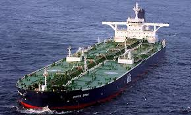
Crude Oil TankerNigeria Bonny Light Crude Oil (BLCO, FLCO and ALCO, etc): We sell mostly on FOB, CIF, TTO and TTT/STS Basis.

Automotive Gas Oil (AGO) and D2: We sell mostly on CIF and TTT/STS.

Bitumen: We sell on CIF and FOB Basis

Marine Equipments/Machines:

We sell and lease all kinds of marine equipments/machines.

Well sell and lease all kinds of vessel e.g. oil tanker, cargo vessel, crew vessel etc.

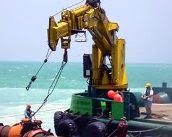
Marine DredgesWe sell and lease tug-boats of all kinds.

We sell and lease barges and sea going barges.

We sell and lease dredgers, swamp-buggy, cranes of all kinds, tug-boats of all kinds bulldozers, etc.

Crushing machine of all kinds and screening plant: We sell on CIF and FOB Basis.

Steel and Metal:

We sell steel pipes and tubes of all kinds

We sell metals of all kinds.

GENERAL CONTRACTORS:

We are also into real estate, transportation, communications and more.


Showing posts with label Oil Vs Gas. Show all posts

Monday, 11 August 2014

AGR wins NCS frame agreement with Premier Oil

AGR has been assigned by Premier Oil to deliver a range of services within the Norwegian Continental Shelf (NCS).


The contract period is for five years plus an additional three years. The scope of the agreement covers well management and well planning services for exploration drilling and field developments. The work scope will encompass delivery of resources, competence and methodology by AGR’s well management team in Norway.
 
Sjur Talstad, AGR’s E.V.P, Norway and Russia, said: “We are pleased to continue the close working relationship with Premier Oil on the Norwegian Continental Shelf (NCS). The activity will be carried out from our fast growing Stavanger office which has an excellent track record of delivering well management and operational HSE support."
 
AGR recently celebrated drilling over 500 well projects in 25 countries for 106 clients - an average of one drilling project commenced every 10 days since 2000. On the NCS, the company has managed over 80 drilling projects on 14 rigs on behalf of 21 operators. Last year, AGR’s Norway team was involved in 15% of exploration wells drilled on the NCS.


Providing useful resources, articles and writings on crude oil, other petroleum products, energy and gas. By Blockline and Associate Ltd Nigeria Ltd, online.

Tuesday, 5 August 2014

Iran oil shipments highest since sanctions began, IEA says

Iran’s crude shipments in February were the highest since the imposition of sanctions and more than a limit agreed with Western powers in an interim nuclear deal, according to the International Energy Agency.


The country shipped 1.65 MMbpd to importing countries in February, the highest level since June 2012, the IEA said. March shipments, estimated to have fallen to 1.05 MMbpd, “will likely be revised upwards closer to February levels upon receipt of more complete data,” the IEA said.


“Imports of Iranian oil are running well above 2013 levels for the third consecutive month” and could remain high in April, the Paris-based adviser to 28 nations said in its monthly oil market report. Under the interim nuclear deal agreed in November, “Iran’s exports are supposed to be held at an average 1 MMbpd for the six months to end-July,” it said.


Iranian oil production plunged by 1 MMbpd, or 28%, from 2011 to 2013 after the U.S. and European Union banned imports of oil from the country and imposed financial sanctions. An interim accord easing restrictions on insurance for Iran’s oil shipments and freeing up cash held outside the country went into effect in January, in return for a suspension of some parts of the country’s nuclear program.


Crude shipments from Iran will probably average above 1.2 MMbpd over the six month period of sanctions relief, Richard Mallinson, geopolitical analyst at Energy Aspects, said by phone today from London.


Keeping production at the level of the last couple of months “will have a real knock-on effect in the diplomacy,” Mallinson said. “I don’t think it’s too late yet for Iran to moderate that short-term behavior, in order to rebuild some confidence in the talks and as they progress towards a final deal.”


Officials from Iran, the U.S., UK, France, Germany, China, Russia and the EU met in Vienna this week. “A lot of intensive work will be needed to overcome the differences,” between the two sides before a final July deadline for a nuclear deal, EU foreign policy chief Catherine Ashton said as talks ended April 9. Diplomats will meet again on May 13 for talks.


The IEA revised upward February import volumes of Iranian crude by 240,000 bpd after it gathered more complete data. China, India, and South Korea all imported more Iranian oil than originally estimated in last month’s report, the IEA said. The agency counts cargoes once they are received in importing countries.


Buyers permitted to import Iranian crude under U.S. sanctions are Turkey, China, Japan, India, South Korea and Taiwan. In March importers of Iranian oil expanded to include Albania and Syria, the IEA said. February data for Chinese, Indian and Korean imports were revised upwards by 168,000, 93,000 and 83,000 bpd respectively. Japanese data was revised down by 103,000 bpd.


Iranian crude stored on tankers fell from 32 MMbbl at the end of February to 22 MMbbl at the end of March, the agency said citing data from E.A. Gibson Shipbrokers.


Providing useful resources, articles and writings on crude oil, other petroleum products, energy and gas. By Blockline and Associate Ltd Nigeria Ltd, online.

Monday, 28 July 2014

Delineation of the 6407/1-6 S gas/condensate discovery near in the Norwegian Sea

Wintershall Norge, operator of production licence 475, has concluded the drilling of appraisal wells 6407/1-7 and 6407/1-7 A.


The wells were drilled about 8 km northeast of the Tyrihans field and 5 km northeast of the 6407/1-6 S gas condensate discovery in production licence 475. The reservoir in this discovery consists of thin sandstone layers from the Lange formation in the Lower Cretaceous. The discovery was made in January 2013. The resource estimate for the discovery was then between 3 and 20 million standard cubic meter of recoverable oil equivalents.


The objective of well 6407/1-7 was to delineate the 6407/1-6 gas/condensate discovery higher up in the structure. A new appraisal well, 6407/1-7 A, was therefore drilled downflank to investigate reservoir thickness and lithology.


Well 6407/1-7 proved gas/condensate in two sandstone intervals with a net vertical thickness of 12 m and a gross reservoir thickness of 16 m. Well 6407/1-7 A proved gas/condensate in two sandstone intervals with a vertical thickness of 7 m and a gross reservoir thickness of 13 m.


The difference in pressure measurements between wells 6407/1-7, 6407/1-7 A and the discovery well 6407/1-6 S indicates that there is no communication between the appraisal wells and the 6407/1-6 S discovery. Well 6407/1-7 has therefore proven a separate discovery, and will be reclassified as a wildcat well.


Preliminary estimates of the size of the new gas/condensate discovery range from 1 to 4 million standard cubic meter of recoverable oil equivalents.


The resource estimate for the 6407/1-6 S gas/condensate discovery has now been downgraded to between 1 and 6 million standard cubic meter of recoverable oil equivalents. The licensees will consider the discoveries in conjunction with other nearby discoveries as regards future development.


This is the second and third exploration well in production licence 475. The production licence was awarded on 29 February 2008 (APA 2007).


Wells 6407/1-7 and 6407/1-7 A were drilled to vertical depths of 3,345 and 3,311 m, respectively, below the sea surface, the latter with a measured depth of 3,571 m. Both wells were terminated in the Lange formation in the Early Cretaceous. Water depth at the site is 280 m. The well has been permanently plugged and abandoned.


Wells 6407/1-7 and 6407/1-7 A were drilled by the Borgland Dolphin drilling facility, which will now proceed to production licence 550 in the northern part of the North Sea to drill wildcat well  31/2-21 S, where Tullow Oil Norge is the operator.


Providing useful resources, articles and writings on crude oil, other petroleum products, energy and gas. By Blockline and Associate Ltd Nigeria Ltd, online.

Saturday, 19 July 2014

Chevron, YPF continue development of Argentina's Vaca Muerta shale

Chevron Corporation has confirmed that subsidiaries of the company have signed agreements with the Argentine oil company YPF S.A. to continue development of shale oil and gas resources from the Vaca Muerta formation located in the Neuquén province in Argentina.


"This is a significant step in our subsidiaries' joint efforts with YPF to develop one of the most exciting shale plays in the world today," said George Kirkland, vice chairman of Chevron Corporation. "Vaca Muerta could become an important contributor to Chevron' s long term production growth."
 
The agreements build off the progress made with the drilling program begun in 2013 and call for continued investment toward large-scale drilling and production in the 96,000-acre (388-sq km) Loma Campana concession. The agreements also call for exploration of shale oil and gas resources in the 49,400-acre (200-sq km) Narambuena area located about 70 mi (100 km) north of Loma Campana in the Chihuido de la Sierra Negra concession, one of the main producing areas in the Neuquén basin of west-central Argentina.


"YPF is a reliable partner and operator that is advancing the project in the right direction," said Ali Moshiri, president of Chevron Africa and Latin America Exploration and Production Company. "We are pleased with the progress achieved so far and look forward to continuing to provide our technical expertise and investment to help Argentina achieve its goal of energy self-sufficiency."


Providing useful resources, articles and writings on crude oil, other petroleum products, energy and gas. By Blockline and Associate Ltd Nigeria Ltd, online.

Friday, 11 July 2014

Age of gas seen as sideshow as producers look to oil

The “golden age of gas” that the International Energy Agency foresees as a result of the U.S. energy boom is hardly the future being embraced by industry executives.


At least based on comments from company officials presenting at the Independent Petroleum Association of America’s conference in New York yesterday. For them, oil is still the prize. Gas is almost an afterthought.


Abraxas Petroleum Corp. CEO Bob Watson boasted about how much of his company’s proved reserves are oil and liquids rather than gas (74%). PDC Energy Inc. said it’s sitting on huge leases in gas fields that aren’t worth drilling. Whiting Petroleum Corp. Chairman and CEO James Volker explained why: oil sells for three times as much as the equivalent amount of natural gas.


That’s no knock against the producers for chasing oil - the commodity that makes the best return for their shareholders. Still, at a time when President Barack Obama is saying natural gas will be a bridge for the U.S. economy from fossil fuels to clean energy, the industry’s views put some realism into the discussion about what energy resources get unlocked by fracing shale rocks.


U.S. natural gas futures have plunged 72% from their 2005 peak to $4.476 as supply expanded to a record. Even after the coldest winter in decades drained stockpiles, the fuel costs about half as much as in Europe. Crude oil, by contrast, is stuck at around $100 a barrel. Even as the growth of U.S. oil supplies has brought the domestic price below the international benchmark, it’s still 7.6% higher than a year ago.


The U.S. is still very much addicted to oil. Consumption will inch up to 19 MMbbl a day this year, more than Europe and China combined, the IEA estimates. Even as expanding domestic supplies reduce imports, they haven’t curbed reliance on oil outright.


If natural gas is to be a bridge fuel, the transition can’t depend on supply alone.


Now that natural gas is so abundant, it needs more uses. While power plants are switching to gas, the U.S. still gets more electricity from coal.


Billionaire T. Boone Pickens wants trucks and buses to run on natural gas. The chemical industry is investing more than $100 bn in expansion projects spurred by cheap shale gas, according to the American Chemistry Council in Washington. And the Energy Department has approved seven projects to export about 9.3 Bcf a day of natural gas in liquid form.


In the time it takes for those new demand sources to develop, making natural gas more valuable in its own right, its role as a byproduct of oil drilling is contributing to more pollution. In North Dakota, drillers pumping oil in the Bakken shale formation are burning off about $1.4 million worth of natural gas every day.


While politicians and industry may pay lip service to natural gas as the clean fuel of the future, the companies out exploiting America’s oil fields leave no doubt that they’re interested in the same fuel as 100 years ago.


Providing useful resources, articles and writings on crude oil, other petroleum products, energy and gas. By Blockline and Associate Ltd Nigeria Ltd, online.

Monday, 14 April 2014

OPEC to make room for extra oil from Iran, Iraq, Libya

OPEC, which supplies 40% of the world’s oil, will accommodate additional output from members Iraq, Iran and Libya, Secretary-General Abdalla El-Badri said, without explaining how it will do so under the group’s ceiling.


The Organization of Petroleum Exporting Countries will wait until 2015 to discuss output targets with Iraq, which currently operates outside the production-quota system for each of the group’s other 11 member countries, El-Badri told reporters today in Doha, Qatar. OPEC foresees gradual increases from Iraq and Iran, while Libya is capable of boosting output by as much as 1 MMbbl within a month, he said.


“There is no problem for OPEC to absorb any production increment from Iraq and Iran in 2014,” El-Badri said. “When Libya output comes back, we will accommodate it because its production is in our numbers.”


OPEC is set to boost output as its second-biggest producer Iraq pumps at a 35-year high and Libya’s government makes progress in talks with rebels who control fields and export terminals in the country’s oil-rich east. Sanctions on Iran over its nuclear program have constrained the country’s production and sales of crude. OPEC plans to meet on June 11 in Vienna to review its output target, now at 30 MMbpd.


Global demand will increase by 1.1 MMbpd in 2014, and the group will produce up to 30 MMbpd for the rest of the year, El-Badri said. “Of course, ministers can change that when they meet,” he said.


OPEC pumped 30.3 MMbpd in March, data compiled by Bloomberg show.


The group has yet to determine how to make room for potential output increases from Iraq, Iran and Libya, El-Badri said. “We will discuss that when they come to the point to discuss their increase,” he said.


Iraq, with the world’s fifth-largest oil reserves, is rebuilding its energy industry after decades of war and economic sanctions. Helped by investors including Royal Dutch Shell Plc and Exxon Mobil Corp., it leap-frogged Iran in 2012 to rank second in OPEC, after Saudi Arabia. Iraq pumped 3.4 MMbpd in March, according to data compiled by Bloomberg, and targets 9 MMbpd.


Iran raised production to 2.9 MMbpd last month, an increase of 65,000 bbl from February, the data show. Libya, which produced 250,000 bpd in March, holds Africa’s biggest crude reserves. Libya’s government reached an agreement with eastern rebels on April 6 to reopen two oil ports.


OPEC’s spare production capacity is at an adequate level this year, and producers and consumers are happy with current oil prices, El-Badri said. The price for OPEC’s basket of crudes rose $1, or 1%, yesterday to $103.16 a barrel, the group’s secretariat reported today.


The group’s 12 members are Algeria, Angola, Ecuador, Iran, Iraq, Kuwait, Libya, Nigeria, Qatar, Saudi Arabia, the United Arab Emirates and Venezuela.


Providing useful resources, articles and writings on crude oil, other petroleum products, energy and gas. By Blockline and Associate Ltd Nigeria Ltd, online.

Contact Blockline Associate Ltd
Contact Blockline Associate Ltd At Sea

World Energy Production