Blockline And Associate Ltd Blog


Blockline and Associate Ltd are sellers of light crude oil and other petroleum products. We also sell and lease out marine equipments, construction machinery and other equipments.

We sell Crude Oil, D2, AGO and other Petroleum product such as:

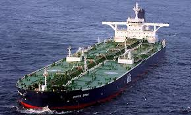
Crude Oil TankerNigeria Bonny Light Crude Oil (BLCO, FLCO and ALCO, etc): We sell mostly on FOB, CIF, TTO and TTT/STS Basis.
Automotive Gas Oil (AGO) and D2: We sell mostly on CIF and TTT/STS.

Bitumen: We sell on CIF and FOB Basis

Marine Equipments/Machines:

We sell and lease all kinds of marine equipments/machines.

Well sell and lease all kinds of vessel e.g. oil tanker, cargo vessel, crew vessel etc.

Marine DredgesWe sell and lease tug-boats of all kinds.

We sell and lease barges and sea going barges.

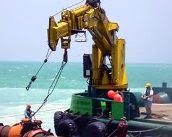
We sell and lease dredgers, swamp-buggy, cranes of all kinds, tug-boats of all kinds bulldozers, etc.

Crushing machine of all kinds and screening plant: We sell on CIF and FOB Basis.

Steel and Metal:

We sell steel pipes and tubes of all kinds

We sell metals of all kinds.

GENERAL CONTRACTORS:

We are also into real estate, transportation, communications and more.


Showing posts with label Crude Oil Market. Show all posts

Tuesday, 12 August 2014

Total launches Kaombo ultra-deep project offshore Angola

Total and its JV partners have made the final investment decision to develop the ultra-deep offshore Kaombo project in Angola. With a production capacity of 230,000 bpd, Kaombo will develop estimated reserves of 650 MMbbl. Following an intensive optimization exercise, the project’s capital expenditure to reach full capacity was reduced by $4 bn to $16 bn, with an expected start-up in 2017.


“With the launch of Kaombo, the upcoming start-up of CLOV and three exploration wells planned in the Kwanza basin this year, Angola remains a priority country for Total,” outlined Yves-Louis Darricarrere, President Total Upstream. “While continuing our commitment to develop the Angolan oil industry, Total has significantly optimized the project’s design and contracting strategy in recent months. Kaombo illustrates both the Group’s capital discipline and objective to reduce capex.”


Located approximately 260 km offshore Luanda in water depths ranging from 1,400 to 1,900 m, the Kaombo project will develop six of the 12 discoveries already made on Block 32. The six fields (Gengibre, Gindungo, Caril, Canela, Mostarda and Louro) cover an area of 800 sq km in the central and southeast part of the block.


The Kaombo development scheme includes 59 subsea wells connected through around 300 km of subsea lines to two FPSOs, each with a production capacity of 115,000 bpd. The two FPSOs will be based on conversions of very large crude carriers (VLCCs) into production units. Associated gas will be exported to the onshore Angola LNG plant.


The Kaombo development includes a substantial level of local content. Over 14 mn man-hours of fabrication and construction works will be performed locally in Angolan yards which will be used for equipment fabrication and assembly.


Total is the operator of Block 32, with a 30% stake, alongside Sonangol P&P (30%), Sonangol Sinopec International (20%), Esso Exploration and Production Angola (Overseas) (15%) and Galp Energia (5%).


Providing useful resources, articles and writings on crude oil, other petroleum products, energy and gas. By Blockline and Associate Ltd Nigeria Ltd, online.

Sunday, 27 July 2014

AWE provides Pateke-4H drilling update

AWE reported that the Pateke-4H development well, including the sidetrack section, was at a measured depth of 4,083 m with the 9 5/8 in. casing successfully installed and cemented to a depth of 3,669 m. Preparations are under way for the drilling of the next interval using an 8 ½ in. drilling assembly to drill horizontally through the reservoir section to a planned measured depth of 5,361 m.
 
The Kapuni F10 sandstone objective has already been intersected on prognosis with oil shows and real time logging measurements indicating the likely presence of an oil bearing reservoir. The commercial significance of the oil shows will not be clear until the horizontal drilling is completed and the reservoir size and quality is fully assessed.
 
The Pateke-4H development well is in PMP 38158 and AWE is the operator. Located in the offshore Taranaki basin, New Zealand, PMP 38158 contains the Tui, Amokura and Pateke fields and has been producing since 2007.
 
Pateke-4H is targeting a mapped northern extension of the currently producing Pateke field. The well is being drilled in water depth of approximately 124 m with a planned total measured depth of 5,361 m, including a 1,272 m horizontal section. If successful, the well will be completed for subsequent tie-back to the Tui FPSO (Umuroa) for production in 2015.


Providing useful resources, articles and writings on crude oil, other petroleum products, energy and gas. By Blockline and Associate Ltd Nigeria Ltd, online.

Wednesday, 23 July 2014

Statoil to cut oil sands CO2 emissions by 20%

Statoil ASA expects to decrease carbon-dioxide emissions per barrel from its Canadian oil-sands projects by 20% within six years, responding to environmental criticism of the crude production method.


Norway’s biggest energy producer said yesterday that carbon intensity from its oil-sands operations rose 25% from a year earlier to 69.7 kilograms of carbon dioxide per barrel.


Statoil is applying solvents to its steam-assisted techniques and will use valves to better direct steam to areas that need it, Staale Tungesvik, president of Canadian operations, said in a telephone interview. The Stavanger-based company also is considering different drilling techniques and more efficient water-recycling processes.


“The difference between oil sands and conventional oil production is that we use gas to heat water to create steam, so the footprint of CO2 is very much out of the generation of steam,” Tungesvik said. “We believe that we have identified technologies that will help us reach our target of reducing CO2 intensity by 20% by 2020.”


Emissions from Alberta’s oil sands have become a focal point for opposition to Calgary-based TransCanada Corp.’s Keystone XL pipeline, which would carry bitumen from the oil sands to U.S. Gulf Coast refineries. Opponents like billionaire Tom Steyer say the line would encourage companies to exploit the world’s third-largest crude reserves, unlocking vast amounts of carbon and accelerating climate change.


Carbon emissions from the oil sands won’t improve without new government policy, said PJ Partington, an Ottawa-based analyst at the Pembina Institute, an environmental think tank.


“Without more stringent policies to drive innovation and deployment of new technologies, carbon intensity is expected to remain flat for the foreseeable future,” Partington said by phone.


The intensity of greenhouse gases in oil-sands emissions fell 7.7% from 2008 to 2012, the Canadian Association of Petroleum Producers, an industry group, said in a Nov. 5 report.


Oil-sands crude is on average 9% more carbon intensive than the U.S. average on a wells-to-wheels basis, which measures CO2 emissions from the start of oil production through to combustion, according to the CAPP report.


Statoil’s carbon emissions from oil-sands production will likely decline this year, Tungesvik said. “With stable production and new technology, I would expect we’ll have lower numbers this year than we had last year,” he said.


By 2025, the Norwegian company has voluntarily targeted to reduce CO2 intensity at its oil-sands operations by 40%.


“It’s about earning more money,” Tungesvik said. “And we think that should go hand-in-hand to improve environmental impact.”


Providing useful resources, articles and writings on crude oil, other petroleum products, energy and gas. By Blockline and Associate Ltd Nigeria Ltd, online.

Contact Blockline Associate Ltd
Contact Blockline Associate Ltd At Sea

World Energy Production