Blockline And Associate Ltd Blog


Blockline and Associate Ltd are sellers of light crude oil and other petroleum products. We also sell and lease out marine equipments, construction machinery and other equipments.

We sell Crude Oil, D2, AGO and other Petroleum product such as:

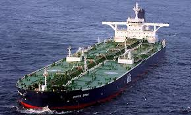
Crude Oil TankerNigeria Bonny Light Crude Oil (BLCO, FLCO and ALCO, etc): We sell mostly on FOB, CIF, TTO and TTT/STS Basis.
Automotive Gas Oil (AGO) and D2: We sell mostly on CIF and TTT/STS.

Bitumen: We sell on CIF and FOB Basis

Marine Equipments/Machines:

We sell and lease all kinds of marine equipments/machines.

Well sell and lease all kinds of vessel e.g. oil tanker, cargo vessel, crew vessel etc.

Marine DredgesWe sell and lease tug-boats of all kinds.

We sell and lease barges and sea going barges.

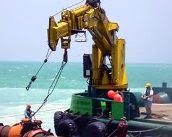
We sell and lease dredgers, swamp-buggy, cranes of all kinds, tug-boats of all kinds bulldozers, etc.

Crushing machine of all kinds and screening plant: We sell on CIF and FOB Basis.

Steel and Metal:

We sell steel pipes and tubes of all kinds

We sell metals of all kinds.

GENERAL CONTRACTORS:

We are also into real estate, transportation, communications and more.


Showing posts with label What Is Crude Oil. Show all posts

Sunday, 20 July 2014

ConocoPhillips raises Eagle Ford resource estimate

ConocoPhillips has reaffirmed its objective to deliver double-digit returns annually to shareholders at its Analyst Meeting held at the New York Stock Exchange. Members of the company’s executive leadership team outlined ConocoPhillips’ goal to consistently deliver 3 to 5% compound annual growth in production and margins.
 
ConocoPhillips also highlighted its substantial U.S. unconventional position and announced an increase of its estimated resource base in the prolific Eagle Ford play. Based on its prime acreage position and technical knowledge, the company has increased its estimates from 1.8 billion to 2.5 billion bbl of oil in place. Production is also expected to increase from current volumes to more than 250,000 boed by 2017.
 
“ConocoPhillips’ wells in the Eagle Ford have the highest oil rates per well and are leading the industry in value. This is attributable not only to the fact that we are in the best part of the play, but also to our relentless focus on  technical innovation and drilling and completion cost efficiencies,” said Chairman and CEO Ryan Lance. “We are applying these benefits and efficiencies across our unconventional portfolio in the Bakken, Permian, Niobrara, Canada, and outside of North America. We believe our unconventional resource base is unmatched, particularly for a company our size."
 
“Beginning this year, we will be growing production and margins across our diverse asset base, and allocating 95% of our annual capital expenditures to growth projects and programs with margins that are higher than our average margin today. We believe we have the asset base, technical capability, world-class workforce and financial strength to deliver on our unique value proposition,” Lance added.
 
Since 2009, ConocoPhillips has added 6.7 billion boe of resources through a diverse and balanced exploration and appraisal portfolio of high-value opportunities. Among the high-quality prospects are four large U.S. Gulf of Mexico discoveries – Tiber, Gila, Shenandoah and Coronado. Further activity is targeting offshore prospects in Australia, Angola and Senegal; conventional exploration in Norway and Indonesia; and unconventional exploration in North America, Poland and Colombia.
 
In its first two years as an E&P company, ConocoPhillips generated proceeds of $12.4 billion from non-core asset sales, advanced new growth projects, achieved visible margin growth, accessed new organic growth opportunities, participated in successful deepwater Gulf of Mexico discoveries and maintained a strong dividend.
 
Over the next several years, ConocoPhillips plans to execute a disciplined capital program of approximately $16 billion per year and achieve the company’s organic reserve replacement target of more than 100%. The company expects to generate 3 to 5% compound annual production growth and margin growth from major development programs and projects already under way in the U.S. Lower 48, Canadian oil sands, UK and Norwegian North Sea, Malaysia and Australia.


Providing useful resources, articles and writings on crude oil, other petroleum products, energy and gas. By Blockline and Associate Ltd Nigeria Ltd, online.

Sunday, 6 July 2014

Regulators to require two-person crews on crude trains

U.S. regulators, acting after an oil-train derailment last year ignited a fireball that killed 47 people in Canada, said they intend to require at least two crew members for crude shipments, a proposal opposed by the railroads.


The Federal Railroad Administration also will establish minimum crew size standard for most freight trains and passenger rail lines, the agency said in a statement.


“We are committed to taking the necessary steps to assure the safety of those who work for railroads and shippers, and the residents and communities along shipping routes,” Transportation Secretary Anthony Foxx said in a statement.


The agency is acting after a train that was operated by one person was left unattended for the night in July and rolled into the center of Lac-Megantic, triggering a fatal explosion that destroyed half the town.


The Association of American Railroads, whose members include Berkshire Hathaway Inc.’s BNSF, said large railroads already run oil trains with at least two crew members.


Nevertheless, Edward Hamberger, the group’s CEO, said the Federal Railroad Administration “has never shared an iota of data that shows or proves two-person crews are safer.”


“If a regulation is proposed, then the least that can be expected is that a federal agency should back it up with grounded data that justifies the recommend rule,” Hamberger said in a statement.


FRA administrator Joseph Szabo said in the agency’s statement that two-person crews would improve the safe transport of crude oil.


Crude-by-rail shipments have soared as oil drillers employ new technologies to crack open and free oil and gas from shale formations at a faster pace than pipelines can handle.


Canadian investigators found that the brakes on the Quebec train weren’t applied with enough force. Canadian regulators have since banned one-person train crews when hauling hazardous material.


“Whether a railroad is carrying crude oil through towns across America, or people taking a well-earned vacation or commuting to work, we need to make sure people are safe, whether on the train and near the tracks,” said Senator Patty Murray, a Washington Democrat.


Murray is the chairman of the Senate Appropriations transportation subcommittee, which is holding a hearing on rail safety today.


Previously, the Transportation Department ordered energy companies using rail to ship oil to test the chemical composition of all crude before loading it on tank cars. It is also studying whether rail cars carrying crude need to be made more robust to lower the risks a derailment will cause an explosion.


Foxx told the subcommittee the oil industry has provided a minimal amount of data on the characteristics of oil from North Dakota’s Bakken shale region, which is slowing down efforts to improve the safety of transporting the fuel. Bakken crude may be more volatile than other types of oil.


Providing useful resources, articles and writings on crude oil, other petroleum products, energy and gas. By Blockline and Associate Ltd Nigeria Ltd, online.

Contact Blockline Associate Ltd
Contact Blockline Associate Ltd At Sea

World Energy Production