Blockline And Associate Ltd Blog


Blockline and Associate Ltd are sellers of light crude oil and other petroleum products. We also sell and lease out marine equipments, construction machinery and other equipments.

We sell Crude Oil, D2, AGO and other Petroleum product such as:

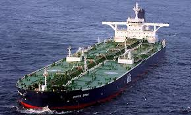
Crude Oil TankerNigeria Bonny Light Crude Oil (BLCO, FLCO and ALCO, etc): We sell mostly on FOB, CIF, TTO and TTT/STS Basis.
Automotive Gas Oil (AGO) and D2: We sell mostly on CIF and TTT/STS.

Bitumen: We sell on CIF and FOB Basis

Marine Equipments/Machines:

We sell and lease all kinds of marine equipments/machines.

Well sell and lease all kinds of vessel e.g. oil tanker, cargo vessel, crew vessel etc.

Marine DredgesWe sell and lease tug-boats of all kinds.

We sell and lease barges and sea going barges.

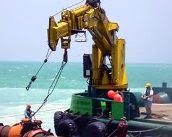
We sell and lease dredgers, swamp-buggy, cranes of all kinds, tug-boats of all kinds bulldozers, etc.

Crushing machine of all kinds and screening plant: We sell on CIF and FOB Basis.

Steel and Metal:

We sell steel pipes and tubes of all kinds

We sell metals of all kinds.

GENERAL CONTRACTORS:

We are also into real estate, transportation, communications and more.


Showing posts with label Light Crude Oil. Show all posts

Wednesday, 30 July 2014

South Sudan's Unity State oil production to restart by July

South Sudan plans to resume crude output in Unity state by July after conflict in the world’s newest nation caused the northern region to freeze production.


Oil fields in Unity will gradually raise output toward the 50,000 bpd they produced before the December shutdown, Petroleum Ministry spokesman Nicodemus Ajak Bior said in an interview in the capital, Juba. A new refinery built by Russian and South Sudanese companies near the state capital, Bentiu, will begin producing 3,000 bpd of diesel in July, he said.


“In the beginning there will be a challenge to bring back production to the pre-shutdown levels,” Bior said. “People are working day and night to see to it that production has restarted.”


South Sudan’s oil output has fallen by about a third since fighting erupted on Dec. 15 between factions loyal to President Salva Kiir and his former deputy Riek Machar. Violence has left thousands of people dead and forced more than a million to flee their homes, according to the United Nations.


The country is currently producing about 160,000 bpd from Upper Nile, the only state still pumping crude, Bior said. Machar has vowed to seize key oil installations in a bid to starve the military of revenue.


Government forces retook Bentiu from rebels on Jan. 26 and the Juba-based Sudd Petroleum Operating Co. has assessed damage to the facilities, Bior said. China National Petroleum Corp., India’s Oil & Natural Gas Corp. and Petroliam Nasional Bhd., the main producers of South Sudan’s oil, evacuated employees from the country due to the fighting.


Construction is finished on Bentiu’s refinery, a JV by Russia’s Safinat and the state-owned Nile Petroleum Corp., Bior said. A later expansion will raise output to 5,000 bpd, he said, without specifying a timescale.


“The refinery is ready, however commissioning will commence once the oil field in Unity state resumes production,” Bior said.


Construction of a 10,000 bpd refinery in Melut county, Upper Nile state, has halted due to the conflict, Bior said. Texas-based Ventech Engineers International LLC was building the facility which is set to produce diesel, kerosene and fuel oil, he said.


South Sudan, which gained independence from Sudan in July 2011, has sub-Saharan Africa’s third-biggest oil reserves, according to BP Plc data.


The country’s low-sulfur crude is prized by Japanese buyers as a cleaner-burning fuel for power generation. The country has the capacity to produce as much as 350,000 to 400,000 bpd, Foreign Minister Barnaba Marial Benjamin said on Feb. 11.


Providing useful resources, articles and writings on crude oil, other petroleum products, energy and gas. By Blockline and Associate Ltd Nigeria Ltd, online.

Thursday, 24 July 2014

Oil India said to study purchase of Shell's Nigerian oil blocks

Oil India Ltd. is studying an acquisition of Nigerian oil and gas assets owned by Royal Dutch Shell Plc, according to people familiar with the matter.


Oil India is weighing a bid for stakes Shell holds in some onshore blocks, valued at as much as $2 billion, the people said. It will partner with India’s Sandesara Group on the potential purchase, according to the people, who asked not to be identified as the deliberations are private.


The explorer joins Dangote Group, controlled by Africa’s richest man, and Seplat Petroleum Development Co. in seeking to acquire Nigerian assets being sold by Western rivals. Shell and Chevron Corp. are divesting fields in the country amid persistent violence and crude theft in the oil-rich Niger River delta.


India’s government-run oil companies are building on their record $5.5 billion of acquisitions last year to secure supplies for Asia’s second-biggest energy consumer. Oil India, which had 124.9 billion rupees of cash at the end of September, has purchased stakes in gas fields in Mozambique and shale assets in the U.S. over the past two years.


Oil India Chairman S.K. Srivastava and finance director Rupshikha Saikia Borah didn’t answer two calls each to their mobile phones seeking comment. Sandesara Group Chairman Nitin Sandesara didn’t immediately respond to an email and phone call to his office.


Sterling Energy & Exploration Production Ltd., a unit of Sandesara Group, has more than 250 MMbbl of certified oil reserves and 1 Tcf of natural gas reserves in the Niger Delta, according to its website. Nigeria pumped about 2.1 MMbpd last month, data compiled by Bloomberg show.


Shell said in October divestments in India have been deferred to 2014. The Anglo-Dutch company’s earnings in the country were curbed by almost $1 billion last year because of oil theft and a LNG export blockade by the government, CFO Simon Henry said March 13.


Earlier this year, Oil & Natural Gas Corp. and Oil India paid $2.5 billion for a 10% stake in a Mozambique natural gas field. Securing fuel supplies is crucial for Prime Minister Manmohan Singh as India relies on imports to meet about three-quarters of its oil requirements.


Seplat Petroleum, based in Lagos, and its partners are bidding for two Nigerian oil and gas permits Shell is selling, Chairman A.B.C. Orjiako said March 11. Dangote Group is in talks to purchase onshore oil blocks in the country as international companies sell assets, Group Executive Director said in January.


Providing useful resources, articles and writings on crude oil, other petroleum products, energy and gas. By Blockline and Associate Ltd Nigeria Ltd, online.

Thursday, 17 July 2014

ROC farms in to PSC offshore Malaysia

Roc Oil Co. reported the farm in to a Production Sharing Contract (PSC), which includes three fields D35, D21 and J4, located offshore Malaysia in water depths of approximately 50 m.


The fields are currently 100% owned and operated by Petronas Carigali and ROC has farmed into a 50% participating interest. The fields are in production with a combined daily oil rate of approximately 10,000 bopd and gas sales of approximately 17 MMscfd gross working interest. ROC’s economic interest (50%) of the 2P reserves from the Fields is 8.7 MMboe.


Roc Oil Co’s CEO Alan Linn said: “The farm in is an excellent fit for our business and in line with our Asian development strategy, we expect the fields to become cornerstone development assets within our growing regional portfolio. The fields, particularly D35, contain material in place oil and gas volumes, and overall field recovery is expected to benefit significantly from the introduction of secondary and tertiary recovery technologies. The fields provide a portfolio of immediately bookable reserves plus contingent and prospective resources, which combined materially add to and extend the reserves and resources life of ROC.


"The farm in agreement includes amendments to the existing PSC, effective from January 1, 2014, until December 2034.The PSC terms are designed for field redevelopment and enhanced oil recovery (EOR) to commercially encourage progressive incremental oil development over the full life of the PSC. ROC’s experience in the redevelopment of the Zhao Dong fields, offshore Bohai Bay, China, is a good analogy for the redevelopment potential of the fields.


"Since 2006, ROC has doubled the recoverable reserves in Zhao Dong with a combination of reservoir development optimisation, facilities debottlenecking, capacity enhancement and the introduction of low cost drilling for production and injection wells designed to maximise recovery from compartmentalised reservoirs. Petronas Carigali and ROC will work together to unlock the Fields’ redevelopment potential and our track record has been key in bringing this significant redevelopment opportunity to ROC.”


Providing useful resources, articles and writings on crude oil, other petroleum products, energy and gas. By Blockline and Associate Ltd Nigeria Ltd, online.

Monday, 7 July 2014

Inpex to make Australia focus of $44 bn exploration plan

Inpex plans to spend $44 bn on exploration and development to double its production by early next decade, investing a significant amount in Australia.


Inpex, developing the $34 bn Ichthys LNG project in northern Australia, already has stakes in 10 exploration blocks surrounding the Ichthys field, President Toshiaki Kitamura said in notes for a speech he’s scheduled to give at a conference in Perth. The LNG will be produced in the Northern Territory capital of Darwin.


“I fully expect we will discover resources to supply the Ichthys LNG plant in Darwin well into the future,” he said. The investment goal is over five years through 2016, he said.


The Ichthys LNG project, one of seven under construction in Australia to meet rising Asian demand for the fuel, is expected to generate total revenue of more than $232 bn, Kitamura said. The developments are forecast to make the country the world’s largest exporter of LNG.


Disagreement between LNG buyers and sellers about how the gas should be priced and future supply and demand could delay the expansion of the LNG industry in a “worst-case scenario,” Kitamura said. Buyers should consider becoming the sellers’ partners in the development of the gas fields as one way to align their views on the market, the Inpex president said.


Providing useful resources, articles and writings on crude oil, other petroleum products, energy and gas. By Blockline and Associate Ltd Nigeria Ltd, online.

Sunday, 6 July 2014

Regulators to require two-person crews on crude trains

U.S. regulators, acting after an oil-train derailment last year ignited a fireball that killed 47 people in Canada, said they intend to require at least two crew members for crude shipments, a proposal opposed by the railroads.


The Federal Railroad Administration also will establish minimum crew size standard for most freight trains and passenger rail lines, the agency said in a statement.


“We are committed to taking the necessary steps to assure the safety of those who work for railroads and shippers, and the residents and communities along shipping routes,” Transportation Secretary Anthony Foxx said in a statement.


The agency is acting after a train that was operated by one person was left unattended for the night in July and rolled into the center of Lac-Megantic, triggering a fatal explosion that destroyed half the town.


The Association of American Railroads, whose members include Berkshire Hathaway Inc.’s BNSF, said large railroads already run oil trains with at least two crew members.


Nevertheless, Edward Hamberger, the group’s CEO, said the Federal Railroad Administration “has never shared an iota of data that shows or proves two-person crews are safer.”


“If a regulation is proposed, then the least that can be expected is that a federal agency should back it up with grounded data that justifies the recommend rule,” Hamberger said in a statement.


FRA administrator Joseph Szabo said in the agency’s statement that two-person crews would improve the safe transport of crude oil.


Crude-by-rail shipments have soared as oil drillers employ new technologies to crack open and free oil and gas from shale formations at a faster pace than pipelines can handle.


Canadian investigators found that the brakes on the Quebec train weren’t applied with enough force. Canadian regulators have since banned one-person train crews when hauling hazardous material.


“Whether a railroad is carrying crude oil through towns across America, or people taking a well-earned vacation or commuting to work, we need to make sure people are safe, whether on the train and near the tracks,” said Senator Patty Murray, a Washington Democrat.


Murray is the chairman of the Senate Appropriations transportation subcommittee, which is holding a hearing on rail safety today.


Previously, the Transportation Department ordered energy companies using rail to ship oil to test the chemical composition of all crude before loading it on tank cars. It is also studying whether rail cars carrying crude need to be made more robust to lower the risks a derailment will cause an explosion.


Foxx told the subcommittee the oil industry has provided a minimal amount of data on the characteristics of oil from North Dakota’s Bakken shale region, which is slowing down efforts to improve the safety of transporting the fuel. Bakken crude may be more volatile than other types of oil.


Providing useful resources, articles and writings on crude oil, other petroleum products, energy and gas. By Blockline and Associate Ltd Nigeria Ltd, online.

Contact Blockline Associate Ltd
Contact Blockline Associate Ltd At Sea

World Energy Production